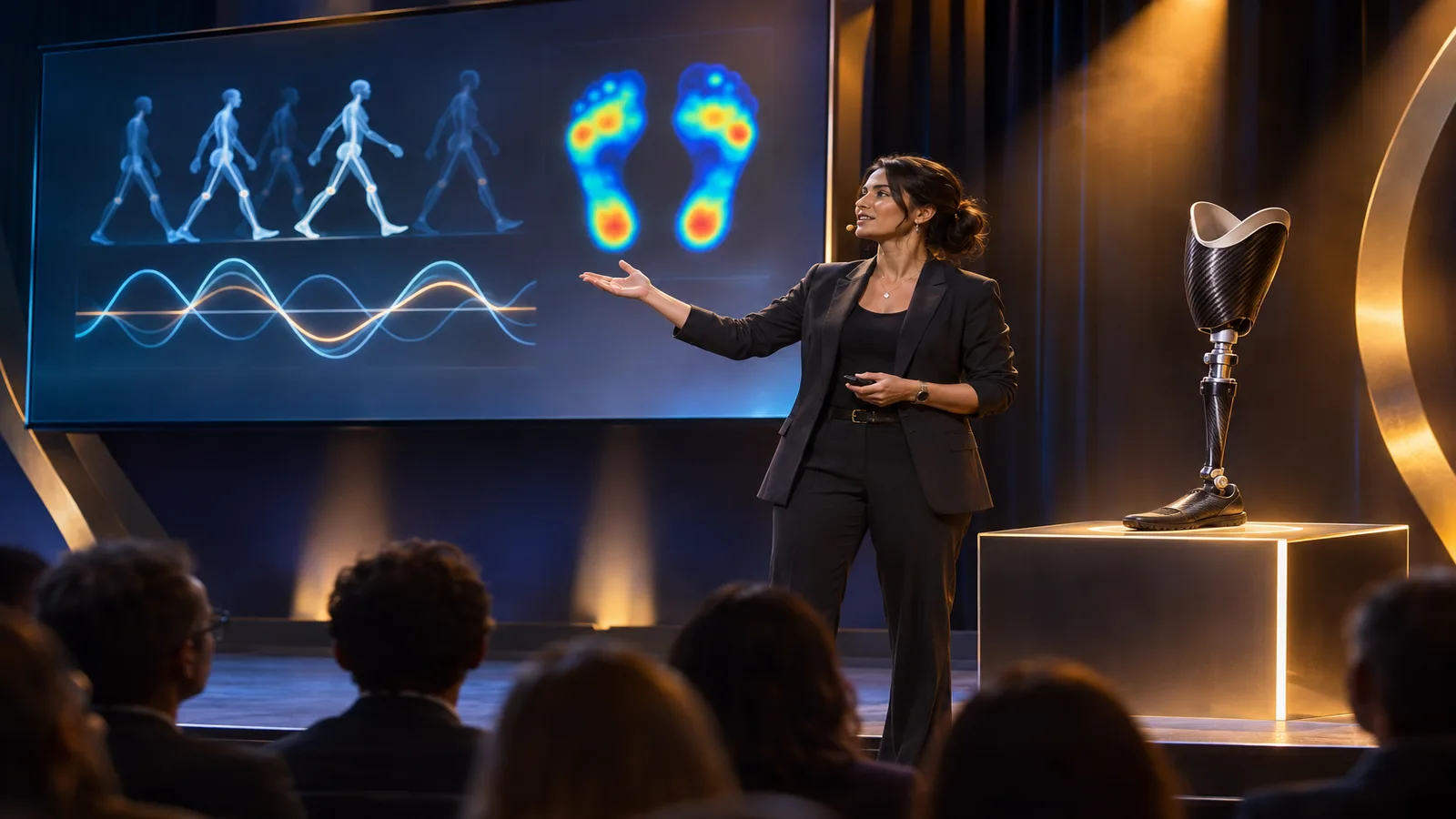
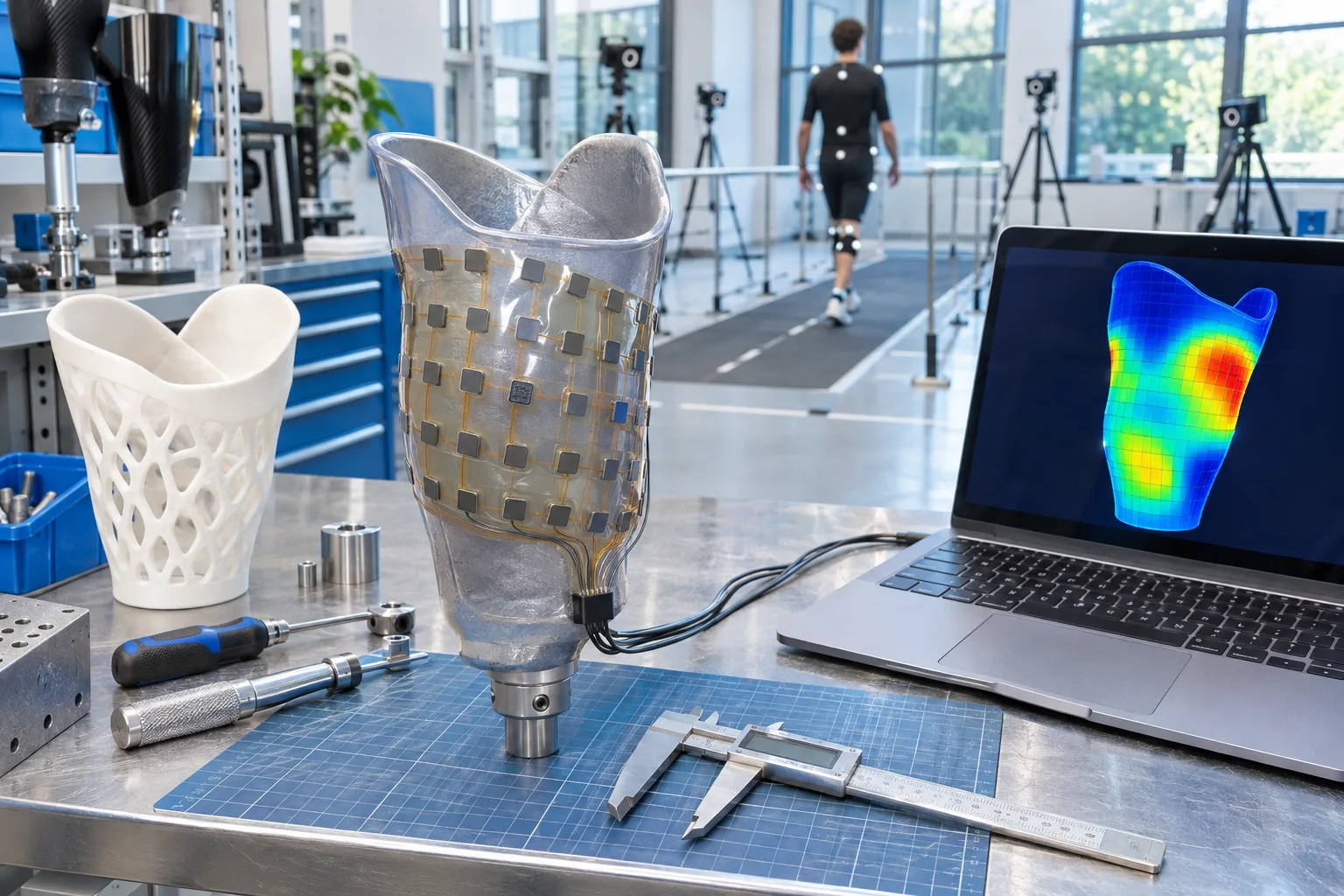
Elena had spent nine years thinking about the place where a person's body meets a machine. Her specialty was the prosthetic socket, the custom-shaped interface between a residual limb and an artificial leg. If the socket fits poorly, everything above it suffers: gait, comfort, skin health, and whether a person wears the prosthesis at all. Her work combined pressure mapping, gait analysis, and computational modeling to make socket fitting more predictable.
When a medical device company in the United States offered her a role leading its socket design research, she was delighted. When the company's counsel suggested an O-1A petition, she was skeptical. I am not famous, she said. I work in clinics. Most of what I have done has my name on it alongside ten other people.
This is a composite story. Elena is not a real person, and her case combines patterns that appear across many applied health engineering profiles. It is offered to show how an applicant who doubted her own record discovered that much of the evidence already existed, and how it was organized against the O-1A criteria. It does not predict any outcome, and every real case depends on its own facts.
Important: This article is an educational composite and does not provide legal advice. EB1 Mentor is not a law firm. O-1A eligibility depends on the specific facts of each case and on current USCIS policy, which may change. Consult a qualified immigration attorney and confirm current requirements on the USCIS website.
The Starting Point: A Record That Looked Ordinary From the Inside
Elena's first list of achievements was short and modest:
- A doctorate in biomedical engineering.
- Fourteen peer-reviewed papers, mostly in rehabilitation engineering journals, often as second or third author.
- Several conference presentations.
- A role as a senior researcher at a university-affiliated rehabilitation center abroad, followed by a role at a prosthetics manufacturer.
- Occasional reviews for journals.
Read that way, it looked like the record of a capable mid-career researcher. What it did not show was how the work had traveled. That became the focus of the next three months.
Understanding the Standard Before Gathering Evidence
The O-1A classification covers individuals with extraordinary ability in the sciences, education, business, or athletics. Under the regulations at 8 CFR 214.2(o), extraordinary ability in these fields means a level of expertise indicating that the person is one of the small percentage who have risen to the very top of the field. The petitioner generally shows this through evidence of a major internationally recognized award or by meeting at least three of the listed evidentiary criteria. USCIS then evaluates the evidence in its totality.
The criteria include, in summary: nationally or internationally recognized prizes or awards; membership in associations requiring outstanding achievements; published material about the person; participation as a judge of the work of others; original contributions of major significance; authorship of scholarly articles; employment in a critical or essential capacity for distinguished organizations; and high salary or remuneration.
Elena's counsel encouraged her to stop thinking about whether she felt extraordinary and instead ask a narrower question for each criterion: what documents exist, and what would a skeptical reader conclude from them?
Finding the Evidence That Was Already There
Original contributions: the fitting protocol that spread
Seven years earlier, Elena had led the development of a pressure-guided socket fitting protocol. It used pressure sensor readings during walking trials to identify areas where a socket needed adjustment, replacing much of the trial-and-error approach clinicians used. The paper describing it listed eleven authors. Elena was second author, but the contribution statement in the journal identified her as having designed the protocol and led the validation study.
When her team began looking for evidence of the protocol's influence, they found far more than expected:
- The protocol had been cited in a clinical practice resource published by a professional prosthetics organization, which recommended pressure-guided assessment for certain patient groups.
- Two prosthetics training programs included the protocol in their curriculum materials.
- A sensor manufacturer had built a software module that implemented the protocol and referenced her paper in its technical documentation.
- Independent researchers in three countries had published studies applying the protocol to new patient populations.
None of this had been on her list. All of it was evidence that her contribution had been adopted by others in the field. Our article on what original contributions of major significance actually require explains why adoption by others is often more persuasive than the novelty of the idea itself.
Expert insight: When looking for evidence of major significance, search for your work in places other than academic databases: clinical guidance documents, training curricula, technical documentation from manufacturers, standards discussions, and patent citations. Applied work often leaves its strongest footprints outside the citation index.
Judging: more than occasional reviews
Elena described her peer review as occasional. Her records told a different story. Over six years, she had reviewed for eight journals, including several leading rehabilitation engineering titles. She had served on the scientific review committee for an international prosthetics and orthotics conference twice, evaluating submitted abstracts. She had also been invited to evaluate grant applications for a national research funding body in her home country.
Her team collected review invitation emails, confirmation records from journal systems, the conference committee listing, and a letter from the funding body confirming her service. The judging criterion was documented thoroughly. Our analysis of how the judging criterion is actually assessed explains why the selectivity of the venue can matter more than raw numbers.
Scholarly articles: presented with context
Her fourteen papers met the scholarly articles criterion on their face. The team added context: the standing of the journals in rehabilitation engineering, the fact that the field is small and specialized, and the citations of her most influential papers compared with typical citation patterns in the subfield. Her authorship positions were explained using the journals' contribution statements rather than left to interpretation.
Critical role: documented by the organizations
At the rehabilitation center, Elena had led the socket research group, which supplied fitting methods used across the center's clinical network. At the manufacturer, she had led the design validation program for a new socket product line. Letters from senior leaders at both organizations described her responsibilities, the outcomes she was accountable for, and how her work affected the organizations' clinical and commercial performance. The letters included specific details rather than general praise.
| Criterion | Initial self-assessment | What the evidence actually showed |
|---|---|---|
| Original contributions | One paper as second author | A protocol adopted in clinical guidance, curricula, commercial software, and independent studies |
| Judging | Occasional reviews | Reviews for eight journals, conference scientific committee service, national grant review |
| Scholarly articles | Fourteen papers | Fourteen papers in leading field journals, with context on standing and citations |
| Critical role | Senior researcher job titles | Leadership of research and validation programs with documented organizational impact |
| Published material | None | Two trade publication articles discussing her protocol, reviewed but not claimed |
The Criteria She Chose Not to Claim
Elena's team also found two trade publication articles that discussed her protocol. They considered claiming the published material criterion, but the articles focused more on the protocol than on her, and the publications' circulation was hard to document. They decided not to claim it. The articles were still included as supporting evidence of the protocol's influence under original contributions.
She had also received a best paper award at a regional conference. It was a genuine honor but was not clearly nationally or internationally recognized. It was mentioned as context rather than claimed as an award.
This restraint mattered. Four well-documented criteria made a cleaner and more credible petition than six criteria, two of them thin.
Warning: Claiming every criterion that might apply can backfire. When an officer sees a weak criterion, it can color the reading of the strong ones. It is often better to claim fewer criteria and present the rest of the evidence as supporting context.
The Advisory Opinion
O-1 petitions generally require a written advisory opinion, often called a consultation, from an appropriate peer group, labor organization, or management organization with expertise in the field, unless an exception applies. For Elena, the question was which organization was appropriate for prosthetics biomechanics.
Her counsel identified a professional organization in rehabilitation engineering whose membership included researchers and practitioners in the field. The organization provided a letter describing the nature of the work and offering its opinion of her qualifications. Counsel confirmed that the organization was an appropriate peer group for the field and that the letter addressed what the regulations require.
Our article on why the O-1A advisory opinion is not the same as a recommendation letter explains the distinct purpose of the consultation and common mistakes in obtaining it.
The Letters That Explained the Field
Recommendation letters played a supporting role. Rather than collecting many letters from collaborators, the team sought five letters, three from experts who had never worked with Elena:
- A researcher in another country who had applied her protocol in a study with a different patient group.
- A clinical director at a prosthetics clinic that had adopted the protocol, who described how it changed fitting practice and reduced follow-up visits.
- An engineer at the sensor manufacturer who explained how the software module was built around her method.
- Her former supervisor at the rehabilitation center, who described her leadership of the research group.
- A leader at the manufacturer who described her role in the new product line.
Each letter described specific facts and pointed to exhibits. None relied on superlatives alone.
The Petition Structure
The final petition was organized so that an officer unfamiliar with prosthetics could follow it easily:
- A short explanation of the field: what a prosthetic socket is, why fit matters, and why predictable fitting has been a long-standing challenge.
- Elena's role and the employer's need for her expertise.
- Each claimed criterion with its evidence, in the order of strength: original contributions, judging, critical role, scholarly articles.
- Supporting evidence, including the trade articles and regional award, presented as context.
- The advisory opinion.
- A summary of how the evidence, taken together, showed that she had risen to the top of her specialized field.
The employer was the petitioner, and the petition described her position, duties, and the duration of the engagement, along with the supporting documentation the employer requirement calls for.
How the Preparation Unfolded Over Three Months
Elena's start date gave the team a defined window, which shaped the order of the work. They did not begin with letters. They began with the evidence search, because the letters needed to point to documents that had not yet been gathered.
| Period | Main work | Why it came at that point |
|---|---|---|
| Weeks 1 to 3 | Evidence search across clinical guidance, curricula, product documentation, and independent studies | The strength of each criterion depended on what this search found |
| Weeks 3 to 5 | Judging records, contribution statements, and organizational letters requested | Third parties needed time to respond |
| Weeks 5 to 7 | Criteria selection and advisory opinion request | The consultation needed a clear description of the role and field |
| Weeks 7 to 10 | Recommendation letters drafted by independent experts, each tied to exhibits | Letters could reference evidence already in the record |
| Weeks 10 to 12 | Petition brief, exhibit index, consistency review, and filing | Every piece could now be checked against every other piece |
Two moments in that sequence changed the case. The first was the discovery that the sensor manufacturer had implemented her protocol in software, which turned an academic paper into evidence of commercial adoption. The second was the decision to drop the published material and awards criteria, which allowed the team to spend the remaining weeks strengthening the four criteria that mattered most rather than defending two that did not.
Elena later said that the most useful part of the process was not the petition itself but the inventory. For the first time, she could see how far her work had traveled. That perspective also helped her plan what to build next.
What Happened Next
In this composite, the petition was approved without a Request for Evidence. That outcome should not be read as typical or guaranteed. Many strong petitions receive RFEs, and the result in any real case depends on its specific facts, the officer's assessment, and current policy. The point of the story is the process, not the result.
After approval, Elena began thinking about a longer horizon. Her counsel noted that the evidence assembled for the O-1A, especially the adoption of her protocol, could form the foundation of a future immigrant petition, if her record continued to grow. The O-1A years were an opportunity to build further, a theme explored in our article on another composite O-1A story from agricultural research.
Lessons for Applied Health Engineers and Clinical Innovators
Look where the work traveled
Applied professionals often underestimate their impact because it shows up in clinical guidance, training materials, product documentation, and practice rather than in citations alone. Searching those places can change the picture.
Turn collaboration into specific contribution
Long author lists are normal in health engineering. Use contribution statements, internal documents, and letters to show exactly what you did.
Count judging properly
Peer review, conference committees, and grant reviews add up. Gather the records and present the selectivity of each venue.
Choose criteria carefully
Claim the criteria you can document well. Use other evidence as context rather than stretching it into a weak criterion.
Explain the field
An officer may not know what a prosthetic socket is. A clear, accessible explanation of the field helps the evidence make sense.
Watch for non-qualification risks
Even a strong record can face problems unrelated to the person's ability, such as issues with the petitioner, the consultation, or the itinerary. Our article on O-1A denial risks that have nothing to do with qualifications covers these.
| Common belief | What Elena's case showed |
|---|---|
| Clinical work does not count as extraordinary ability | Clinical adoption can be strong evidence of major significance |
| Middle authorship is a weakness | Contribution statements and letters can clarify a central role |
| Peer review is minor | Documented judging across selective venues supports a criterion |
| More criteria are better | Fewer, well-documented criteria can be more persuasive |
| Fame is required | Recognition by peers and adoption in practice can show standing at the top of a specialized field |
An Evidence-Gathering Checklist for Applied Health Engineers
- Search clinical practice resources and professional organization guidance for references to your methods.
- Check training curricula and continuing education materials that may include your work.
- Look for commercial products, software, or technical documentation that implement or cite your methods.
- Gather journal contribution statements for papers with long author lists.
- Collect records of every peer review, conference committee, and grant review assignment.
- Obtain detailed letters from organizations describing your role and its outcomes.
- Identify independent experts who have used your work and can describe how.
- Identify an appropriate peer organization for the advisory opinion early.
- Prepare a plain-language explanation of your field and why your contributions matter.
- Decide which criteria to claim and which evidence to present as context.
If you are unsure how your own record maps to these criteria, a structured profile evaluation can help identify strengths you may be overlooking.
Frequently Asked Questions
Can clinical or applied engineering work support an O-1A petition?
Yes, when the evidence shows the required level of recognition. Adoption of methods in practice, clinical guidance, commercial products, and independent studies can all be relevant, depending on the facts.
Does middle authorship weaken the scholarly articles criterion?
Not necessarily. Authorship of scholarly articles can support the criterion regardless of position, and contribution statements and letters can clarify your role for other criteria such as original contributions.
What counts as judging for O-1A purposes?
Participation, individually or on a panel, as a judge of the work of others in the same or an allied field. Journal peer review, conference abstract review, and grant review can all be relevant when documented.
Do I need a major international award?
No. A major internationally recognized award is one path, but most petitioners instead meet at least three of the listed criteria.
What is an advisory opinion?
A written consultation from an appropriate peer group, labor organization, or management organization, generally required for O-1 petitions unless an exception applies. It is different from a recommendation letter.
Should I claim every criterion that might apply?
Usually not. Claiming fewer criteria with strong documentation is often more persuasive than claiming many weakly.
Can trade publications count as published material about me?
They can, if the material is about you and your work and appears in professional or major trade publications or other major media, with appropriate documentation. Articles focused mainly on a product or method may fit better as supporting evidence elsewhere.
Can my O-1A evidence be reused for a green card petition later?
Often, yes, although immigrant categories have their own standards. The O-1A years can be used to strengthen the record further.
Is an approval without an RFE typical?
Outcomes vary widely. Many strong petitions receive RFEs. No composite story predicts the result of a real case.
What if none of the criteria fit my field?
The regulations allow comparable evidence in some situations. Our article on the O-1A comparable evidence provision explains how that works.
Conclusion
Elena's record did not change between her first skeptical conversation and the filing of her petition. What changed was how well it was understood and documented. A protocol that she thought of as one paper turned out to be embedded in clinical guidance, training programs, and commercial software. Reviews she called occasional turned out to be a sustained record of judging. Job titles became documented leadership roles with measurable outcomes.
Many professionals in applied health engineering, clinical innovation, and rehabilitation science have similar records. Their work is collaborative, practical, and widely used, and it rarely announces itself. Finding and presenting that evidence carefully is what turns an ordinary-looking record into a coherent O-1A petition.
Every immigration case is unique, and professional guidance can help you identify and organize evidence you may not realize you have. If you are considering an O-1A petition, you can contact EB1 Mentor or learn more about our O-1A portfolio services. EB1 Mentor is not a law firm and does not provide legal representation; for legal questions, consult a qualified immigration attorney.
References and Further Reading
- USCIS: O-1 Visa, Individuals with Extraordinary Ability or Achievement
- 8 CFR 214.2(o): Aliens of extraordinary ability or achievement
- USCIS Policy Manual, Volume 2, Part M: Nonimmigrants of Extraordinary Ability or Achievement (O)
- USCIS: Form I-129, Petition for a Nonimmigrant Worker
- National Institute of Biomedical Imaging and Bioengineering (NIH)
O-1A requirements and USCIS policy may change. Verify current requirements with official USCIS guidance or qualified legal counsel.
Every immigration case is unique. If you work in applied engineering, clinical innovation, or research and are considering an O-1A, contact EB1 Mentor to discuss how professional guidance can help you build a stronger portfolio. EB1 Mentor is not a law firm and does not provide legal representation.