

The Most Misunderstood Part of an EB-2 NIW Petition
When immigration professionals and attorneys talk about EB-2 NIW denials, one phrase comes up again and again: failure to establish national importance. Not failure to prove advanced degree status. Not failure to demonstrate merit. The most common breakdown point is the endeavor framing itself — the core argument that what you do matters enough to the United States that the normal labor certification process should be waived in your favor.
It is a deceptively simple concept that requires careful, sophisticated presentation. This article walks through exactly how national importance is evaluated under the current legal framework, what makes an argument strong versus weak, and how professionals across different fields can build petitions that hold up under USCIS scrutiny.
If you are beginning to think about your EB-2 NIW strategy, start by reading our overview of EB-2 NIW services and portfolio development to understand what a full petition requires beyond just the national importance argument.
Understanding the Dhanasar Framework
Since the Administrative Appeals Office (AAO) issued its landmark Matter of Dhanasar decision in 2016, EB-2 NIW petitions have been evaluated under a three-prong test. USCIS adjudicators are required to assess:
- Whether the proposed endeavor has substantial merit and national importance
- Whether the petitioner is well-positioned to advance the proposed endeavor
- Whether, on balance, it would be beneficial to the United States to waive the job offer and labor certification requirements
Each prong is distinct but interconnected. A petition that scores well on Prong 2 — demonstrating impressive credentials and positioning — but offers a weak Prong 1 argument will still be denied or hit with an RFE. Likewise, even a compelling national importance narrative collapses if the applicant cannot demonstrate they are genuinely positioned to execute on it.
This article focuses primarily on Prong 1, because it is where most applicants either build a strong foundation or quietly undermine their own case without realizing it.
Expert Insight: The Dhanasar framework replaced the older Matter of New York State Department of Transportation standard, which was widely criticized for being unpredictable and inconsistently applied. Dhanasar gave adjudicators clearer structure — but it also gave petitioners a roadmap. Understanding that roadmap in detail is one of the most productive things you can do before filing.
What 'National Importance' Actually Means to USCIS
The word 'national' does not mean that your work must affect every person in the United States, or that it must be a headline-grabbing breakthrough. USCIS policy guidance clarifies that national importance can be established in a variety of ways, and that locality or region-specific impact can still qualify if there is a clear national stake in the outcome.
Here is what USCIS has consistently found persuasive versus what tends to fall short:
| Stronger National Importance Arguments | Weaker National Importance Arguments |
|---|---|
| Work that addresses a documented national need, skills gap, or strategic priority | Work described only in terms of employer benefit or individual career value |
| Research with clear implications for public health, national security, economic competitiveness, or energy | Research framed only in academic terms without real-world policy or deployment connection |
| Technology development that fills a gap acknowledged by federal agencies or national reports | Technology described as innovative without connecting it to any larger national context |
| Work that contributes to a field where the United States has a documented strategic interest | Work framed purely in terms of institutional prestige or salary level |
| Contributions with measurable downstream effects on U.S. infrastructure, workforce, or competitiveness | Generic statements that the work is important without supporting evidence |
The distinction is not always about the quality of the underlying work. A brilliant researcher working on a genuinely important problem can still produce a weak national importance argument if the petition does not explicitly connect the dots for the adjudicator.
The Three Components of a Strong Prong 1 Argument
A persuasive national importance argument typically operates at three levels simultaneously: the field-level context, the specific problem, and the applicant's contribution. Most petitions that fail tend to stay too long at only one of these levels.
1. Establishing the Field-Level Context
Before you can argue that your work matters nationally, you need to establish that the field itself occupies a position of national significance. This does not mean writing a lengthy academic literature review. It means citing credible third-party evidence — government reports, federal agency priorities, Congressional mandates, national strategy documents — that establishes why the United States has a stake in this area.
For example, a biomedical engineer working on novel drug delivery mechanisms might cite FDA priority review designations, NIH funding priorities in that therapeutic area, or documented gaps in domestic manufacturing capacity for certain biologics. The goal is to show that the federal government, national institutions, or national policy frameworks have already recognized this as an area of importance — the applicant is not inventing that claim from scratch.
2. Defining the Specific Problem
Once the field context is established, the petition must narrow down to the specific problem the applicant is addressing and explain why that specific problem matters at a national scale. Vague problem framing is one of the most common weaknesses in EB-2 NIW petitions.
Saying 'I work in cybersecurity, which is a national priority' is field-level context, not a specific problem. Saying 'I am developing intrusion detection architectures for critical infrastructure networks serving U.S. energy grids, where documented vulnerabilities have been flagged by federal cybersecurity agencies' is a specific problem with a national stake.
3. Connecting the Applicant's Contribution
The final component is the bridge between the problem and the petitioner. This section must explain — clearly and in non-jargon-heavy language — what the applicant's specific contribution is, why it is meaningfully different from existing approaches, and why the United States benefits from this person continuing this work here rather than abroad or through the standard immigration process.
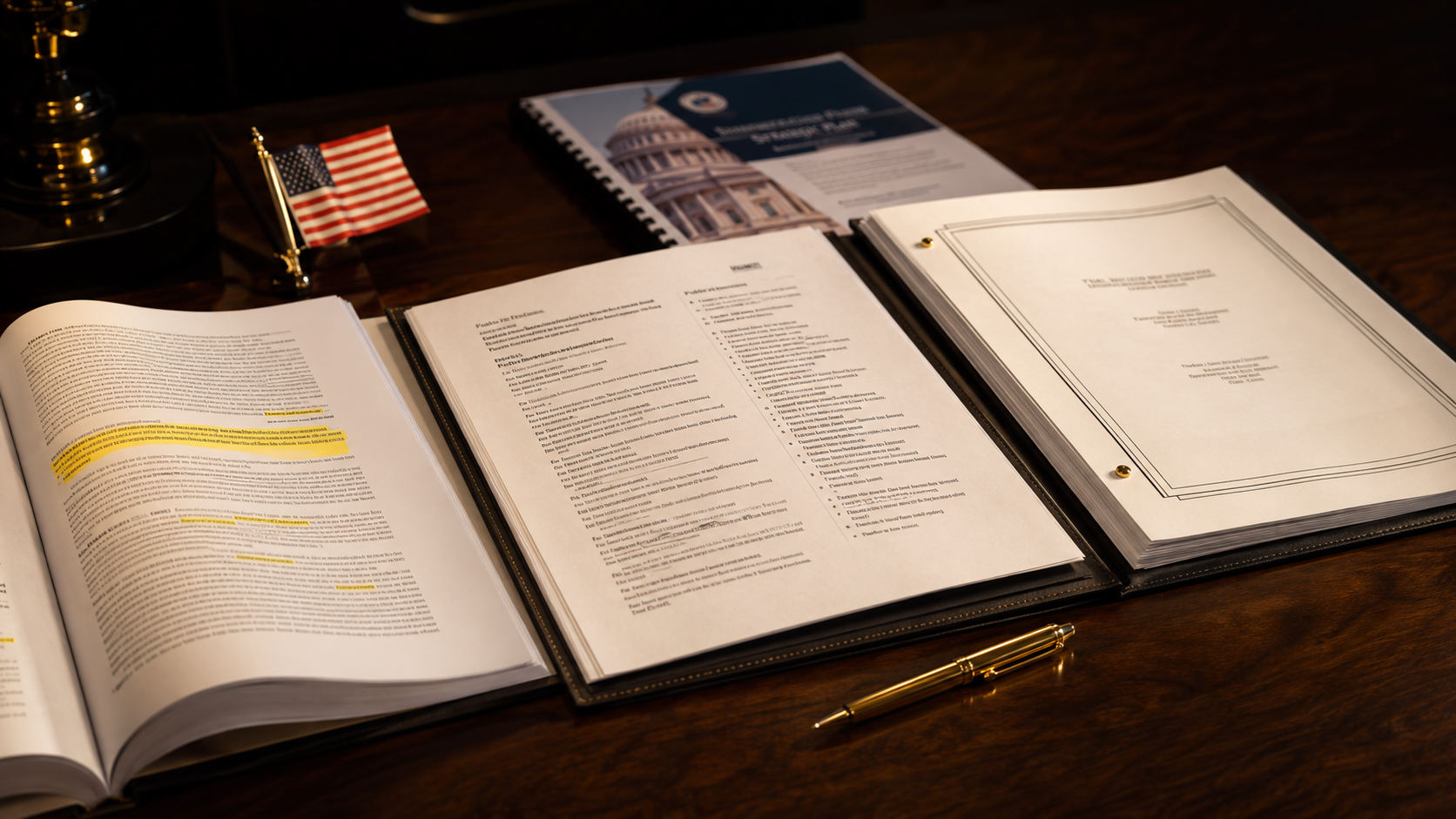
Warning: Many petitioners outsource the national importance argument entirely to a generic template or to language borrowed from their academic field. Adjudicators read hundreds of EB-2 NIW petitions. A boilerplate 'my field is important' argument will not satisfy Prong 1, and it signals that the petition may not have been carefully prepared. The national importance argument must be specific, sourced, and tied directly to the applicant's actual work.
Three Professional Scenarios: National Importance in Practice
The following scenarios illustrate how different professionals can construct Prong 1 arguments that are tailored to their actual work rather than generic field claims.
Scenario 1: An AI Safety Researcher
Dr. Asel is a machine learning researcher specializing in alignment and safety evaluation for large-scale AI systems. She has published peer-reviewed work on methods for detecting misalignment in production AI deployments and has collaborated with teams at two major research institutions.
A weak national importance framing for Dr. Asel might read: 'AI is a rapidly growing field with significant implications for the U.S. economy, and Dr. Asel has made contributions to AI safety research.'
A stronger framing would instead point to: the NIST AI Risk Management Framework and its documented emphasis on alignment verification as an open technical problem; Executive Branch policy priorities around safe AI deployment; the documented shortage of qualified AI safety researchers in the United States relative to investment in the sector; and how Dr. Asel's specific methodology addresses a gap that existing published approaches do not cover. The argument would then explain that her continued research in the United States directly contributes to U.S. capacity to develop AI systems that can be safely deployed in critical sectors.
Scenario 2: A Clean Energy Engineer
Marcos is a materials scientist working on next-generation solid-state battery electrolytes for electric vehicle applications. He has a portfolio of published research and a patent application on a novel synthesis process.
Rather than simply claiming that clean energy is important, a well-constructed Prong 1 argument for Marcos would reference DOE strategic plans for domestic battery manufacturing, documented U.S. dependence on foreign supply chains for battery components, and national targets for EV adoption that require exactly the kind of battery performance improvements his research is designed to deliver. The argument would then explain how his specific synthesis method addresses a bottleneck that existing electrolyte technologies have not solved, and how his continued work in the United States directly contributes to domestic battery manufacturing competitiveness.
Scenario 3: A Public Health Data Scientist
Priya is a computational epidemiologist who has developed predictive modeling frameworks for tracking infectious disease outbreaks at the county level. Her models have been used by a state health department during a recent outbreak response.
A strong national importance argument for Priya would not simply say 'public health is important.' It would connect her work to documented gaps in the U.S. public health data infrastructure identified in post-pandemic assessments, CDC and HHS priorities around outbreak preparedness, and the specific limitations of existing surveillance tools that her modeling approach overcomes. The fact that her models have already been deployed in a real outbreak response provides concrete evidence that the work has practical national health implications — not just theoretical ones.
For professionals in any of these fields who are evaluating whether their profile supports a strong EB-2 NIW petition, our profile evaluation tool is a useful first step before investing in full petition preparation.
Common Framing Mistakes That Weaken National Importance Arguments
Even experienced professionals with genuinely important work sometimes undermine their own petitions through avoidable framing errors. The following are the most common ones we see.
Mistake 1: Equating Academic Prestige with National Importance
Publishing in a top-tier journal or holding an appointment at a prestigious university does not by itself establish national importance. Academic prestige and national significance overlap in some cases but are not the same thing. An adjudicator evaluating Prong 1 is asking whether the work matters to the United States at a national level — not whether the work is respected within a particular academic community.
Mistake 2: Describing Work Only in Technical Terms
A petition that describes the applicant's work in highly technical language without translating it into policy-relevant, economic, or societal terms loses the adjudicator quickly. USCIS officers are not specialists in your field. The national importance argument must be accessible and its implications must be stated plainly.
Mistake 3: Using Only Employer Letters as Evidence
Employer support letters can be valuable, but they speak to the applicant's value to that employer — not to the national importance of the endeavor. Petitions that rely primarily on employer letters to carry the national importance argument tend to struggle. Third-party government sources, policy documents, and independent evidence of the field's national significance carry substantially more weight.
Mistake 4: Treating National Importance as a Background Section
Some petitions treat the national importance argument as a short introductory section and then move on to the credentials evidence. This is a structural mistake. National importance is the thesis of the entire petition, and it should be reinforced throughout — in the cover letter, in the support letters, in the evidence organization, and in the conclusion.
Warning: Do not conflate the fact that your field receives federal funding with a specific national importance argument for your petition. USCIS has seen countless petitions that cite federal research spending in a field without explaining how the specific petitioner's work connects to the national interests that funding is meant to serve. The connection must be made explicitly, not left for the adjudicator to infer.

Evidence That Supports a National Importance Argument
The Dhanasar framework is not about assertions — it is about evidence. The following checklist covers the types of documentation that can strengthen a Prong 1 argument when selected and framed appropriately for the applicant's specific situation.
National Importance Evidence Checklist
- Federal agency priority documents: Strategic plans, roadmaps, or priority lists from agencies like NIH, NSF, DOE, NIST, DOD, DHS, or HHS that explicitly identify the applicant's area of work as a national priority
- Congressional reports or legislation: References to statutes, appropriations, or Congressional Research Service reports that establish national stakes in the field
- Executive orders or national strategy documents: Relevant White House or federal strategy documents that identify the field as a national interest area
- Published policy analyses: Reports from established policy research institutions, national academies, or government-commissioned studies that document gaps the applicant's work addresses
- Documented workforce or capability gaps: Data showing national shortages of professionals in the field, or gaps in domestic capabilities that the applicant's work helps fill
- Independent letters from national-level authorities: Support letters from policy officials, senior researchers at national laboratories, or other credible third parties who can speak to the national stakes of the work — not just its academic merit
- Evidence of prior impact: Documentation showing that the applicant's work has already been adopted, referenced, or implemented in ways that produced measurable benefits at an institutional, regional, or national level
- Third-party citations and references: Evidence that others working on nationally important problems have built on or referenced the applicant's contributions
How Prong 1 Connects to Prong 2 and Prong 3
While this article focuses on Prong 1, it is important to understand how the three prongs function as a system rather than as independent tests. A weak Prong 1 does not get rescued by a strong Prong 2, and a strong Prong 1 can be undermined by a poorly constructed Prong 3 argument.
| Prong | Core Question | Common Evidence | Common Weakness |
|---|---|---|---|
| Prong 1: Substantial Merit and National Importance | Does the work matter to the United States at a meaningful scale? | Federal priority documents, policy reports, workforce gap data, third-party national-level recognition | Generic field claims without specificity; employer-centric framing |
| Prong 2: Well-Positioned to Advance the Endeavor | Is this specific person capable of executing the work? | Degrees, publications, citations, patents, awards, employment history, expert letters | Strong credentials but weak connection to the specific endeavor described in Prong 1 |
| Prong 3: On Balance, Beneficial to Waive | Does the national benefit of waiving the labor certification requirement outweigh the protections it normally provides? | Evidence of unique contributions, unavailability of qualified domestic workers in the specific area, urgency of the national need | Treating this prong as a formality rather than an independent argument |
A coherent EB-2 NIW petition has a consistent through-line: the national importance argument in Prong 1 shapes what credentials are highlighted in Prong 2 and what waiver justification is constructed in Prong 3. Petitions that were built by assembling pieces separately — credentials here, importance argument there, waiver justification as an afterthought — often lack this coherence and struggle as a result.
Expert Insight: Think of the three Dhanasar prongs not as three separate boxes to check but as a narrative arc. Prong 1 establishes the national stage and the problem. Prong 2 establishes this person as the right actor for that stage. Prong 3 closes the argument by explaining why allowing this person to work in the United States without going through labor certification is clearly in the national interest. When all three prongs tell the same story, the petition is structurally much stronger.
Fields Where National Importance Is Easier — and Harder — to Establish
Certain fields have a head start on national importance arguments because the federal government has explicitly identified them as strategic priorities. Others require more creative framing. Neither situation is disqualifying, but they call for different strategies.
Fields where national importance arguments tend to be more straightforward include: artificial intelligence and machine learning safety and reliability; semiconductor design and manufacturing; biotechnology and biopharmaceutical development; clean energy and battery technology; cybersecurity and critical infrastructure protection; quantum computing; advanced manufacturing; and pandemic preparedness and public health surveillance. In these areas, there are abundant federal strategy documents, agency priority lists, and Congressional mandates to draw from.
Fields where national importance arguments require more careful construction include: social sciences, humanities, certain areas of pure mathematics, arts and creative fields, and highly specialized sub-disciplines where the national stakes are real but less obviously documented. This does not mean petitioners in these fields cannot succeed — it means they need to do more work to surface and present the evidence that establishes national stakes, and to be specific about how their particular work connects to those stakes.
If you are uncertain whether your specific area of work can support a strong national importance argument, our team at EB1 Mentor works with professionals across many disciplines to evaluate petition viability before the preparation process begins. You can schedule a consultation to discuss your specific situation.
What USCIS RFEs on Prong 1 Look Like
When USCIS issues an RFE on Prong 1, the language tends to cluster around a few specific concerns. Understanding these patterns can help applicants anticipate gaps before they file rather than after.
Common RFE language on national importance includes requests to provide additional evidence establishing that the proposed endeavor has national scope rather than merely local or regional significance; requests to clarify how the petitioner's specific work — as opposed to the field generally — has national importance; requests to explain how the benefit to the United States from the petitioner's work is distinct from the benefit any qualified worker in the same field might provide; and requests to provide independent, authoritative third-party evidence of the national stakes, beyond employer letters or the petitioner's own assertions.
Each of these RFE patterns maps to one of the framing mistakes described earlier in this article. The good news is that most of them are preventable with careful petition preparation. The challenging part is that preparing responses to Prong 1 RFEs after a filing is considerably harder than getting the framing right before filing.
For applicants who have already received an RFE or denial and are rebuilding their petition strategy, our EB-2 NIW services include strategic review and repositioning support.
Frequently Asked Questions
Does my work have to be in a STEM field for national importance to apply?
No. While STEM fields often have the most readily available federal documentation of national importance, USCIS policy and the Dhanasar framework do not limit national importance to science and technology. Healthcare, policy research, public administration, arts and culture, education, and many other fields can support national importance arguments when properly framed and evidenced. The key is specificity and third-party support, not field category.
Can a small company or startup founder use EB-2 NIW?
Yes, and this is an increasingly common profile. The Dhanasar framework was specifically designed to be more flexible than the prior standard. An entrepreneur or startup founder whose work addresses a documented national need — in areas such as workforce development, healthcare access, domestic technology production, or critical infrastructure — can potentially construct a strong Prong 1 argument. The challenge is showing that the endeavor itself has national stakes beyond the business interests of the particular company, which requires careful framing.
Is it enough to cite federal funding in my field as evidence of national importance?
Federal funding in your field is useful context, but it is not sufficient on its own. USCIS expects you to connect the federal funding to the specific problem your work addresses and then to your specific contributions. Saying 'NIH invests billions in biomedical research and I do biomedical research' does not establish Prong 1. Explaining that NIH has specifically identified your therapeutic target as an unmet priority, and that your approach addresses a gap that prior funded efforts have not resolved, is a much stronger argument.
How long should the national importance section of my petition be?
There is no fixed length requirement. Petitions that attempt to establish national importance in two or three paragraphs almost always fail — there simply is not enough room to build the argument with specificity and supporting evidence. A well-developed Prong 1 argument often runs three to seven pages in the cover letter alone, supported by exhibits that include policy documents, government reports, and third-party declarations. Quality and specificity matter more than word count, but brevity is rarely appropriate for this section.
My work is in a field where the government has cut funding recently. Can I still argue national importance?
Yes, though the framing requires care. National importance is not the same as current funding levels — it reflects the long-term strategic stake the United States has in a field or problem area. In some cases, reduced funding in a critical area is itself evidence of a gap that makes independent contributors more valuable, not less. This situation calls for particularly careful petition construction and may benefit from a professional strategic review before filing.
What is the difference between the national importance of a field and the national importance of a specific endeavor?
This distinction is central to Prong 1. USCIS is not asking whether your field is nationally important in the abstract. It is asking whether your specific proposed endeavor — the particular work you are doing and plan to continue doing in the United States — has national importance. A field can be nationally important while a specific project within it has only narrow, local, or employer-specific impact. The petition must establish importance at the level of the specific endeavor, not just the field.
Do support letters from my employer help with national importance?
Employer letters can be one piece of the evidence picture, but they carry limited weight for national importance specifically. An employer's perspective on why your work is valuable to their organization does not establish national importance — it establishes employment value. The most effective support letters for Prong 1 come from independent third parties who have national-level credibility and who can speak to the national stakes of the problem area and the applicant's contribution to it. These might include senior researchers at national laboratories, senior government scientists, or policy officials, depending on the field.
Is there a difference between how EB-2 NIW and EB-1A handle national importance?
Yes, significantly. EB-1A (extraordinary ability) does not require a national importance argument in the same way — it requires evidence that the petitioner has risen to the very top of their field through sustained acclaim, using a statutory ten-criteria framework. EB-2 NIW requires demonstrating that the petitioner's specific proposed endeavor serves the national interest, which is a different and in some ways more forward-looking framing. An applicant who is strong on EB-2 NIW may not meet EB-1A criteria, and vice versa — though some applicants have profiles that can support both petitions. Our FAQ page covers additional comparisons between these visa categories. The NIW-specific requirements that follow national importance are covered separately in our guide to the second and third prongs. Framing national importance well only answers the first of three prongs, though; the third still needs its own argument for why waiving the labor certification specifically benefits the United States.
Building a National Importance Argument That Holds Together
A well-constructed Prong 1 argument is not written in a day. It begins with research — identifying the policy and evidence landscape around your specific area of work. It continues with careful drafting that links the field context, the specific problem, and your particular contribution in a way that is clear, specific, and fully supported by exhibits. It ends with a review process that tests whether an adjudicator who knows nothing about your field could read the argument and understand why the United States has a stake in your continued work here.
This is a different skill than writing a grant proposal or a research paper. It requires understanding how USCIS adjudicators evaluate petitions, what kinds of evidence carry the most weight, and how to anticipate the specific questions an adjudicator is likely to ask. Getting this right at the outset is substantially more cost-effective than responding to RFEs or rebuilding a denied petition.
Professionals who want to explore their EB-2 NIW options can review our resources section for additional guidance and frameworks, or explore our in-depth guides on NIW petition strategy. For those ready to discuss their specific situation, the EB1 Mentor contact page is the best starting point.
References and Further Reading
- USCIS Policy Manual, Volume 6, Part F, Chapter 5 — National Interest Waiver (verify current guidance directly with USCIS, as policy guidance may be updated)
- AAO Precedent Decision: Matter of Dhanasar, 26 I&N Dec. 884 (AAO 2016)
- NIST Artificial Intelligence Program — useful as national importance reference for AI-related petitions
- U.S. Department of Energy — Vehicle Technologies Office: Batteries — reference for clean energy and battery technology petitions
- CDC Center for Forecasting and Outbreak Analytics — reference for public health data science and epidemiology petitions
- Federal Register — primary source for federal rulemaking, agency priorities, and policy documents relevant to EB-2 NIW national importance arguments
Every EB-2 NIW Case Is Different
The national importance argument that works for one professional may need to be built entirely differently for another, even within the same field. The framing, the evidence selection, and the way the three Dhanasar prongs are structured together all depend on the specifics of your work, your credentials, and your goals.
EB1 Mentor works with researchers, engineers, scientists, data professionals, public health specialists, and other accomplished professionals to develop petition strategies that are grounded in the actual requirements of the Dhanasar framework — not generic templates. We are not a law firm and do not provide legal representation, but we help professionals build stronger, better-documented, more strategically coherent immigration profiles.
If you are starting to evaluate your EB-2 NIW options, or if you want a strategic review of an existing petition strategy, we encourage you to reach out through our contact page. We are glad to help you understand what a strong national importance argument looks like for your specific situation.