
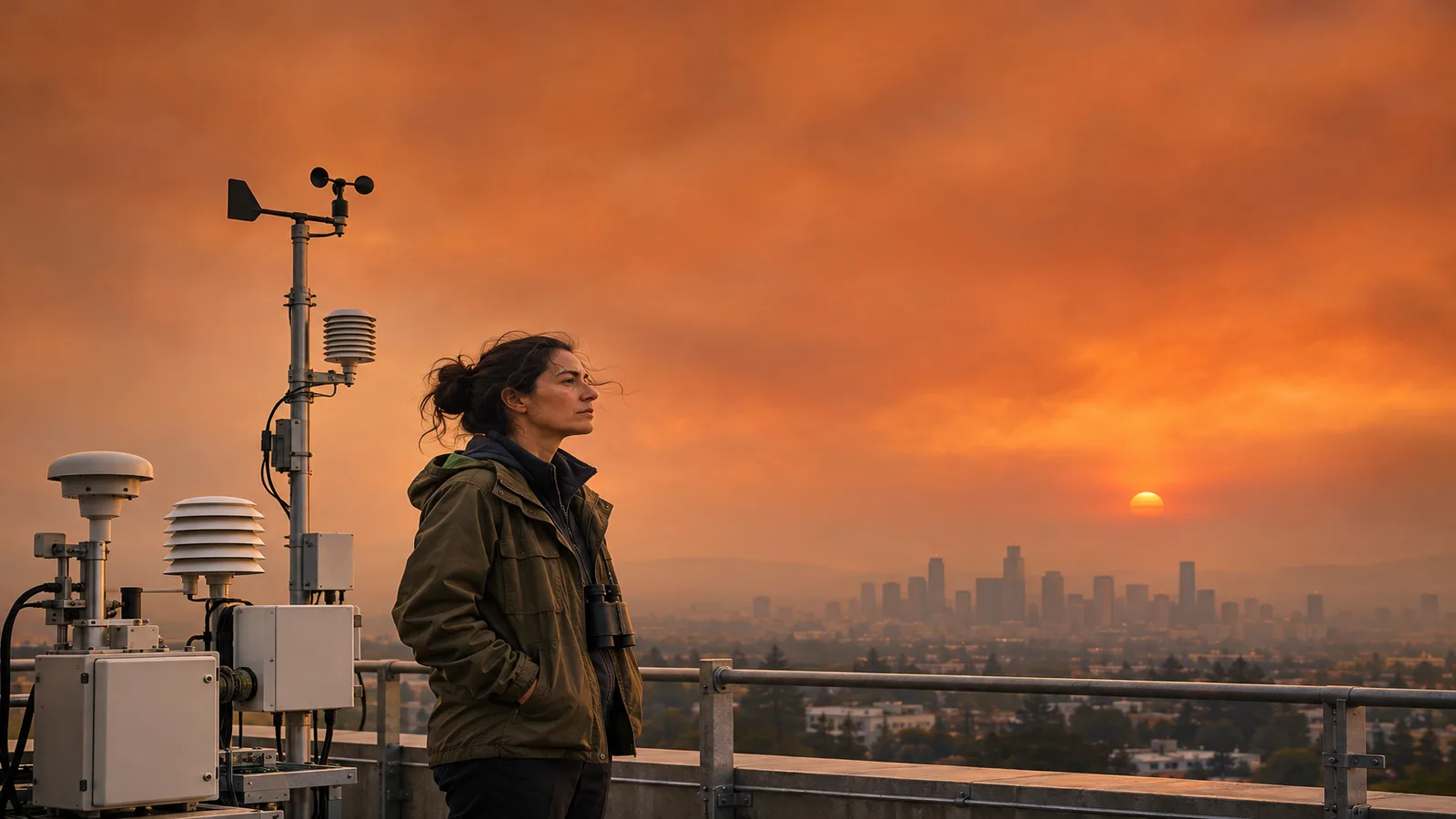
On the worst smoke days, Ines Carvalho's phone would light up with messages from people she had never met. A forecaster in another state asking whether a model run looked right. A school district's operations manager asking a colleague of hers whether outdoor events should be cancelled the next day. A public health analyst who wanted to understand why the forecast had changed overnight. Ines was an atmospheric scientist. Her work was improving short-range forecasts of wildfire smoke, and on those days it was being used in real time.
When she began preparing an EB-2 NIW petition, none of this appeared in her first draft. Her proposed endeavor read: to continue my research in atmospheric and climate science. It was accurate, broad, and very hard to evaluate.
This is a composite story. Ines is not a real person, and her case combines patterns that appear across many applied science profiles. It is shared to show how an endeavor can be narrowed until it becomes something an officer can judge, and how evidence of real-world use can support each part of the Matter of Dhanasar framework. It does not predict any outcome.
Important: This article is an educational composite and does not provide legal advice. EB1 Mentor is not a law firm. EB-2 NIW eligibility depends on the specific facts of each case and on current USCIS policy, which may change. Consult a qualified immigration attorney and confirm current requirements on the USCIS website.
The Record Before the Petition
Ines held a doctorate in atmospheric science. After a postdoctoral position, she joined a university research center that worked closely with regional air quality forecasters. Her record included:
- Eleven peer-reviewed papers on smoke plume rise, emissions estimation, and forecast verification.
- An open-source software package that converted satellite fire detections into emissions inputs for forecast models.
- A role in a multi-institution project to improve next-day smoke forecasts.
- Invited talks at several air quality and atmospheric science meetings.
- A competitive federal research grant on which she was co-investigator.
On paper, it looked like the record of a productive mid-career scientist. What it did not yet show was where the work had gone after publication.
Step One: Narrowing the Endeavor
Under Dhanasar, the first prong requires that the proposed endeavor have both substantial merit and national importance. The decision emphasizes that the analysis focuses on the specific endeavor and its potential prospective impact, not on the importance of a broad field. Climate and atmospheric science are plainly important. That alone does not establish the national importance of a particular person's proposed work.
Ines and her advisors rewrote the endeavor several times. Each version became more concrete:
| Draft | Endeavor statement | Problem |
|---|---|---|
| First | Continue research in atmospheric and climate science | Describes a field, not an endeavor |
| Second | Improve air quality forecasting | Closer, but still very broad |
| Third | Improve wildfire smoke forecasting using satellite data | Names a method, but not the users or the outcome |
| Final | Develop and validate methods that improve the accuracy of next-day wildfire smoke forecasts, and make those methods available to the air quality forecasters and public health agencies who issue smoke warnings | Names the problem, the method, the users, and the channel to public benefit |
The final version did three things. It identified a specific problem, the accuracy of next-day smoke forecasts. It named a method, improved emissions and plume modeling using satellite data. And it explained how the work reached beyond her employer, through forecasters and agencies who issue warnings that people act on. Our guide on how to frame a national importance endeavor describes this kind of narrowing in more general terms.
Expert insight: A well-framed endeavor often answers four questions in one sentence: what problem, by what method, for whom, and through what channel. If any of the four is missing, an officer has to fill in the gap, and may not fill it the way you would.
Why the national importance argument now worked
With the narrowed endeavor, the national importance argument could rest on concrete points. Wildfire smoke can travel far from the fires that produce it, affecting air quality in regions hundreds of miles away. Smoke forecasts are used to decide when to issue public warnings, when to adjust outdoor activities, and when vulnerable groups should take precautions. Improvements in forecast methods that are adopted by forecasters in multiple regions can therefore have effects well beyond a single institution.
Ines's petition did not claim that her work had prevented specific health outcomes. That would have required evidence she did not have. Instead, it showed that her methods were used in the forecasts that informed warnings, and let the importance of those warnings, documented through public agency materials, provide context. This is similar to the reasoning in our article on how preventive work shows national importance, where the benefit lies in harm avoided rather than outcomes counted.
Step Two: Finding Evidence of Use
The second prong asks whether the petitioner is well positioned to advance the endeavor. Relevant factors include education, skills, a record of success in related efforts, a plan for future activities, progress toward the endeavor, and the interest of relevant users or entities. For Ines, the most powerful evidence was something she had never thought to collect: proof that others used her work.
The software package
Her open-source emissions package had been adopted more widely than she realized. The team documented:
- Forecast system documentation from two regional forecasting groups describing the package as part of their workflow.
- Repository records showing contributions and issue reports from users at several institutions.
- Published studies by independent researchers who used the package in their own work, with citations to her paper describing it.
Our article on how practitioners show deployment rather than publication discusses why adoption evidence of this kind can carry particular weight.
Forecast verification results
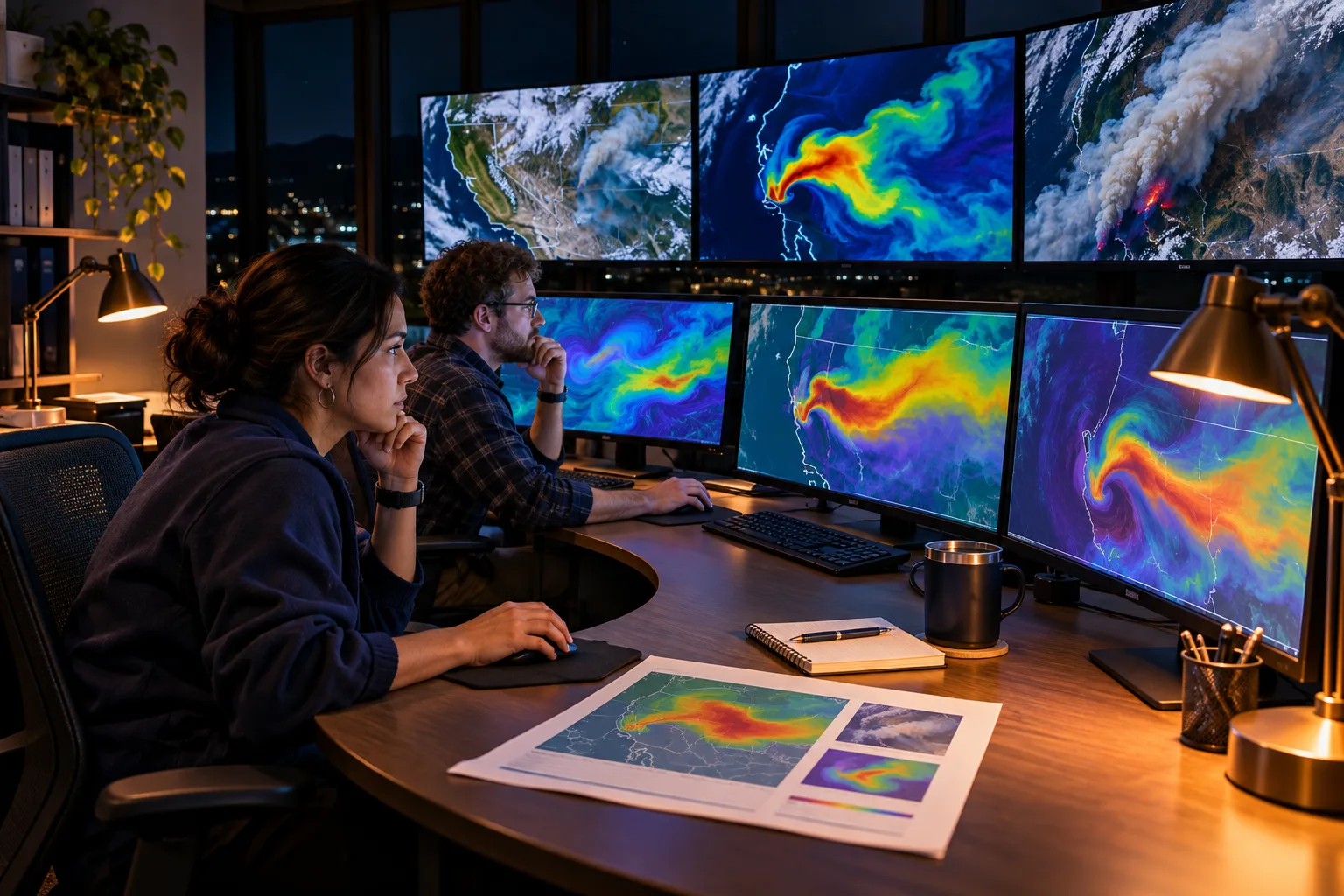
Ines had co-authored a verification study comparing forecasts before and after her emissions method was introduced in one regional system. The paper reported improved agreement with observed smoke concentrations for next-day forecasts during the study period. The petition presented the paper with a plain-language explanation and was careful to describe the findings exactly as the paper reported them, without generalizing beyond the study.
Letters from users
The team sought letters primarily from people who used her work rather than people who collaborated with her:
- A senior air quality forecaster at a regional agency, who described how the method was incorporated into daily forecasting and how forecasters relied on it during smoke events.
- A public health analyst who explained how next-day smoke forecasts informed advisories and why forecast accuracy mattered for them.
- An independent atmospheric scientist at another university who had used her software in research and described its influence on the field.
- Her center director, who described her role and plans.
Each letter described specific uses and pointed to exhibits. None relied on general praise alone.
Plan and progress
For the forward-looking part of prong two, the petition included her research plan for the next several years, the federal grant on which she was co-investigator, a letter of intent from a forecasting group to pilot her next method, and evidence of conference invitations specifically focused on operational smoke forecasting. Our article on why being well positioned is not the same as being qualified explains why trajectory and progress matter as much as credentials.
| Prong two factor | Evidence in Ines's petition |
|---|---|
| Education and skills | Doctorate, specialized training, publication record |
| Record of success | Adoption of her software by forecasting groups and researchers; verification study |
| Plan for future activities | Multi-year research plan focused on next-day smoke forecast methods |
| Progress toward the endeavor | Federal grant as co-investigator; ongoing collaboration with forecasters |
| Interest of relevant entities | Letter of intent to pilot her next method; letters from forecasters and public health analysts |
Step Three: Why Waive the Job Offer?
The third prong asks whether, on balance, it would benefit the United States to waive the job offer and labor certification requirements. Ines's petition made a focused argument based on her facts.
- The work crosses institutional boundaries. Her methods were used by forecasters at multiple agencies and by researchers at several universities. The value of the endeavor did not depend on a single employer, which made a single-employer labor certification an awkward fit.
- Her specific expertise was the source of the benefit. As the developer of the method and the software, she was positioned to improve and extend them in ways that would be difficult to replicate quickly.
- Timeliness. The petition described ongoing development work and the pilot planned with a forecasting group, explaining why continuity mattered.
The argument did not rely on general statements about urgency. It explained why her case, specifically, fit the considerations Dhanasar describes. Our article on why the third prong needs its own argument covers this in more depth.
Warning: Do not claim that your work saves lives, prevents disasters, or protects public health unless the evidence directly supports that claim. Applied science petitions are often more persuasive when they show precisely how the work is used and let the documented importance of that use speak for itself.
What Nearly Went Wrong
Two problems almost weakened the petition before it was filed.
The citation count trap
Ines's citations were solid but not extraordinary. An early draft placed them at the center of prong two. Her advisors moved them to a supporting role and led with adoption and use. In applied fields, operational use often tells a stronger story than citation numbers alone.
Letters that sounded the same
The first round of letters came from close collaborators and used similar phrasing. Two were replaced with letters from users who had encountered her work independently, and the remaining letters were revised to describe specific facts. The result was a more credible and varied set of voices.
The Threshold Question Before Dhanasar
Before any of the three prongs, an EB-2 NIW petitioner must qualify for the EB-2 classification itself, either as a member of the professions holding an advanced degree or as a person of exceptional ability. Ines qualified through her doctorate, which made this step straightforward, but it still had to be documented with her diploma, transcripts, and, because her degree was earned abroad, an evaluation showing its U.S. equivalence. Petitioners sometimes treat this step as a formality. An officer does not.
How the Exhibits Were Organized
Because the evidence came from many sources, including agencies, repositories, journals, and individual users, the team built the exhibit index around the endeavor rather than around document types. Each section opened with a one-page summary explaining what the exhibits in it showed and which prong they supported.
| Exhibit section | Contents | Prong supported |
|---|---|---|
| A. Qualification | Degree, transcripts, credential evaluation | EB-2 threshold |
| B. The problem | Public agency materials on smoke warnings and forecast use | Prong one, national importance context |
| C. Adoption of her methods | Forecast system documentation, repository records, independent studies | Prong two, record of success |
| D. Results | Verification study and plain-language summary | Prong two, record of success |
| E. Plan and progress | Research plan, grant documents, letter of intent | Prong two, plan and progress |
| F. Letters | User and independent expert letters | Prongs one and two |
| G. Waiver argument support | Evidence of multi-institution use and ongoing development | Prong three |
This structure meant that an officer reading the brief could move directly from each argument to the documents behind it. It also exposed gaps early: when the team first assembled section G, they realized they had not documented the ongoing development work, and added repository activity and the pilot letter to fill it.
The Filing and the Result
The final petition was organized around the narrowed endeavor: an explanation of the problem of next-day smoke forecasting, the national importance of accurate forecasts for public warnings, the evidence of her work's adoption, her plan and progress, and a tailored third-prong argument. In this composite, it was approved. That outcome should not be read as typical or guaranteed. Many strong petitions receive Requests for Evidence, and results in real cases depend on their facts and on current policy.
What She Is Building Next
After filing, Ines kept doing what the petition said she would do. The pilot with the forecasting group went ahead, and she began extending her emissions method to account for smoke from fires that smolder for long periods, a known weakness in many forecasts. She also started keeping a simple log: every time someone outside her center used her software, cited her method in operational documentation, or invited her to brief a forecasting team, she saved a copy.
That habit was the most practical lesson of the whole process. Much of the evidence that carried her petition had to be reconstructed months or years after the fact. The next time she needs to document her work, whether for an extension of her research program, a grant renewal, or a future immigration filing, the record will already exist.
Lessons for Applied Scientists
Describe the endeavor, not the field
A broad field description is accurate but difficult to assess. Narrow it until it names a problem, a method, the users, and the channel to public benefit.
Follow your work out of the journal
Look for your methods in forecast system documentation, agency materials, software repositories, and other researchers' studies. Applied work often travels further than citation counts suggest.
Choose letter writers who used the work
Letters from users carry more weight than letters from collaborators, especially when they describe specific uses.
Be precise about impact
Report results exactly as studies found them. Do not generalize beyond the evidence.
Build the third prong from your facts
Explain why your specific situation fits the considerations for waiving the job offer, rather than relying on generic statements.
Our other composite NIW stories, including an epidemiologist who almost did not file, show similar patterns in neighboring fields.
An Evidence Checklist for Applied Science NIW Petitions
- Write an endeavor statement naming the problem, method, users, and channel to public benefit.
- Collect documentation showing where operational groups or agencies use your methods, data, or software.
- Gather repository records, user contributions, and independent studies that use your tools.
- Present verification or evaluation results exactly as reported.
- Seek letters from users who encountered your work independently.
- Document grants, collaborations, and letters of intent that show progress and interest.
- Prepare a multi-year plan for the endeavor.
- Draft a third-prong argument based on your specific facts.
- Keep citation counts in context rather than at the center.
- Check every claim of impact against the evidence.
If you are unsure how your own record maps to the Dhanasar framework, a structured profile evaluation can help clarify your endeavor and the evidence that supports it.

Frequently Asked Questions
Can an atmospheric or environmental scientist qualify for an EB-2 NIW?
Yes, if the petition shows a qualifying EB-2 basis and meets the three Dhanasar prongs. The strength of the case depends on the specific endeavor and evidence.
How specific should my endeavor be?
Specific enough that an officer can understand the problem, the method, who benefits, and how the work reaches beyond your employer.
Does operational use of my work count as evidence?
Documented use by agencies, forecasters, or other professionals can be strong evidence for the well positioned prong and can provide context for national importance.
Are citation counts important for an NIW?
They can help, but they are not required to be high. Evidence of use and influence often carries more weight in applied fields.
Should my letters come from government officials?
Letters from people who use your work, including those at public agencies, can be persuasive. Check whether any institutional rules affect their ability to write letters, and focus on specific facts.
Can I claim my work protects public health?
Only to the extent the evidence supports it. It is usually stronger to show how your work is used in public warnings and let documented agency materials explain why those warnings matter.
Does a federal grant help an NIW?
Funding for the proposed endeavor can support progress and the interest of relevant entities under the well positioned prong.
Is open-source software good evidence?
It can be, especially with documentation of adoption by others, such as repository activity, user contributions, and independent studies that use it.
Is approval without an RFE typical?
Outcomes vary. Many strong petitions receive RFEs. No composite story predicts the result of a real case.
What if my degree was earned outside the United States?
A foreign degree can qualify for the advanced degree route if it is equivalent to a U.S. master's degree or higher, or to a bachelor's degree followed by five years of progressive experience. A credential evaluation is commonly used to document equivalence. Confirm current requirements with USCIS guidance.
Should I also consider EB-1A?
If your record shows sustained national or international acclaim at the top of the field, EB-1A may be worth evaluating. It uses a different standard.
Conclusion
Ines's work had been shaping public warnings for years before she filed. What her first draft lacked was not achievement but precision. An endeavor described as climate research could not be judged. An endeavor described as improving next-day smoke forecasts for the forecasters and agencies who issue warnings could. Once the endeavor was clear, the evidence of use, the plan, and the third-prong argument fell into place around it.
Many applied scientists are in a similar position. Their work is used by people they have never met, in decisions that rarely carry their names. Finding those uses and describing the endeavor precisely is often what turns a strong record into a coherent EB-2 NIW petition.
Every immigration case is unique, and professional guidance can help you define your endeavor and organize the evidence behind it. If you are preparing an EB-2 NIW, you can contact EB1 Mentor or learn more about our EB-2 NIW portfolio services. EB1 Mentor is not a law firm and does not provide legal representation; for legal questions, consult a qualified immigration attorney.
References and Further Reading
- Matter of Dhanasar, 26 I&N Dec. 884 (AAO 2016)
- USCIS Policy Manual, Volume 6, Part F, Chapter 5: Advanced Degree or Exceptional Ability
- USCIS: Employment-Based Immigration, Second Preference EB-2
- AirNow: Air quality information from U.S. government partners
- U.S. EPA: Wildfire Smoke and Your Patients' Health
National interest waiver guidance may change. Verify current requirements with official USCIS guidance or qualified legal counsel.
Every immigration case is unique. If you are an applied scientist preparing an EB-2 NIW and want help defining your endeavor and organizing the evidence behind it, contact EB1 Mentor to discuss how professional guidance can help you build a stronger portfolio. EB1 Mentor is not a law firm and does not provide legal representation.