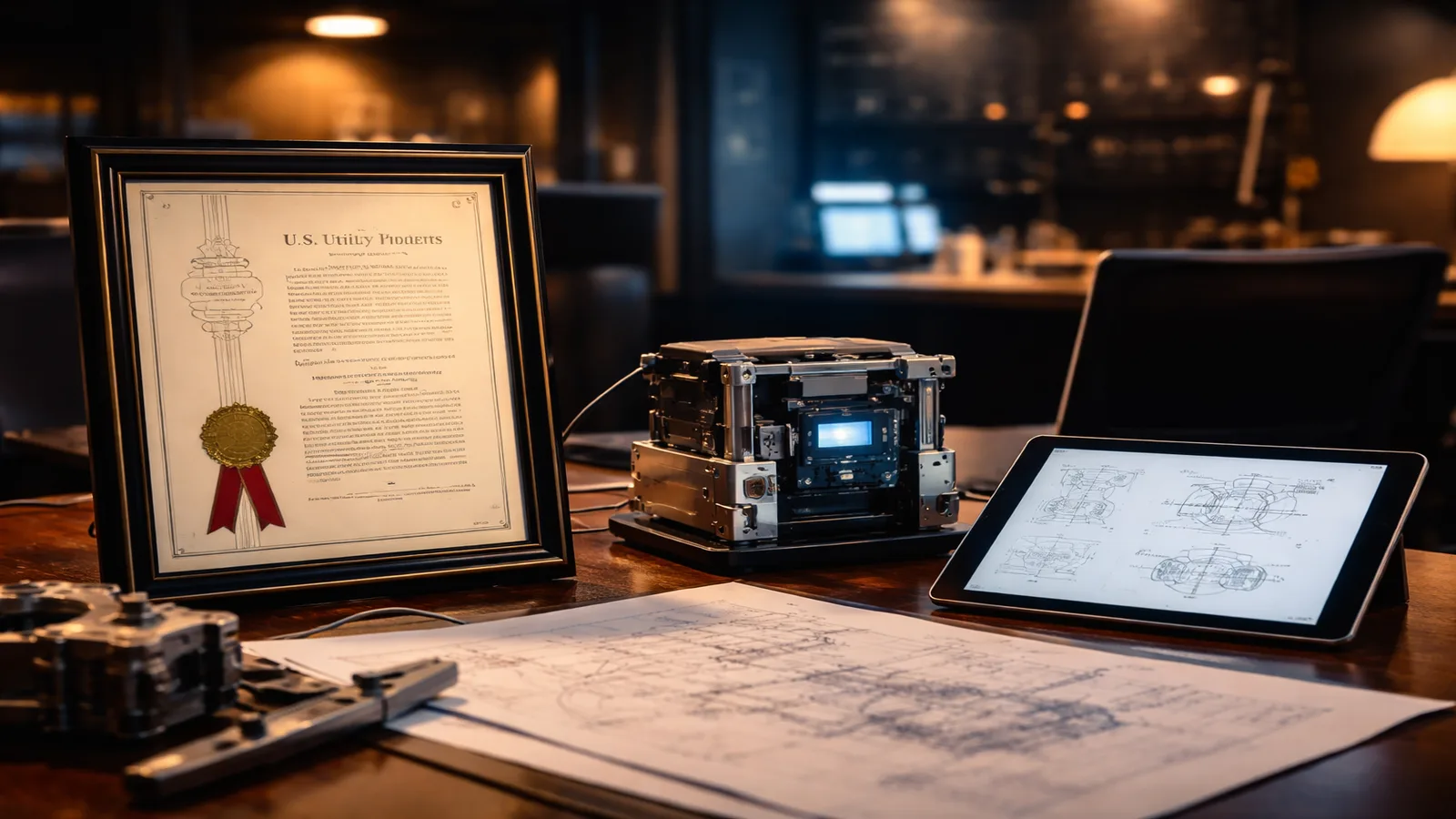
A granted patent feels like proof. It has a number, a government seal, an inventor's name on it, and a legal claim that nobody else may make, sell, or use the same invention without permission. For someone preparing an EB-2 National Interest Waiver petition, it is tempting to treat a patent as a finished argument rather than one piece of a larger one. It is not unusual for a petitioner to attach the patent certificate, a short paragraph describing the technology, and assume the strength of the document will carry the endeavor prong on its own. Not every NIW case is built around this kind of endeavor-specific evidence at all; physicians committing to underserved-area service qualify under a separate standard where the usual importance argument does not apply in the same way. A patent is not the only kind of government-issued signal that can anchor an NIW case; for a field too new to have much of a patent or citation record yet, see a composite NIW success story built around a quantum computing researcher's emerging field.
It rarely does. A patent proves that an idea is new and non-obvious enough to satisfy a patent examiner at a specific point in time. It does not, by itself, prove that the invention has been adopted, that it addresses a problem of national importance, or that the petitioner is well positioned to advance it. Those are separate evidentiary questions, and USCIS evaluates them separately even when the underlying technology is the same. This article looks specifically at what patent evidence contributes to an EB-2 NIW case, what it does not contribute, and how to build the surrounding record so the patent functions as strong supporting evidence rather than as the entire case. Readers new to the category may also want a general overview of EB1 Mentor's EB-2 NIW portfolio strategy services before working through the evidentiary detail below.
What a Patent Actually Establishes
A utility patent granted by the United States Patent and Trademark Office (USPTO) confirms three things: the invention is novel, it is non-obvious to someone skilled in the relevant field, and it is useful in a defined sense. The examiner who reviewed the application compared it against prior art and concluded that no single existing reference, or obvious combination of references, anticipated the claims. That is a real and defensible technical finding, and it is worth including in an NIW petition as evidence of the petitioner's original contribution to their field.
What the grant does not confirm is scale of impact. USPTO examiners do not evaluate whether an invention will be commercially successful, whether it will be adopted by other companies, or whether it addresses a matter of consequence to the United States. Novelty and importance are different tests, decided by different people, for different reasons. An NIW adjudicator reviewing the same patent is asking a question the patent examiner never had to answer: does this endeavor have national importance, and is this person well positioned to advance it. A patent is evidence toward that question. It is not the answer to it.
Petitioners sometimes over-describe the legal mechanics of a patent (claims, prosecution history, examiner citations) and under-describe what the invention actually does and why it matters. An adjudicator who is not a patent attorney needs a plain-language explanation of the problem the invention solves before the legal detail will mean anything.
Granted, Pending, and Provisional: Not Interchangeable Evidence
Not all patent-related documents carry the same evidentiary weight, and treating them as equivalent is a common error in self-prepared petitions.
- Granted (issued) patents carry the most weight. The claims have survived examination, and the document is a matter of public record that a USCIS officer can independently verify through USPTO's public search tools.
- Published pending applications show that an application has been filed and published, but the claims have not yet been tested against prior art by an examiner. They demonstrate active innovation activity but a weaker technical finding than an issued patent.
- Provisional applications are the weakest form of patent-related evidence on their own. A provisional application is never examined, is never published unless a later non-provisional application references it, and expires after twelve months if not converted. Citing a provisional filing without more context can read, to a skeptical reviewer, as an attempt to imply a stronger filing status than actually exists.
None of this means pending or provisional filings are useless. They can still support a narrative about ongoing innovation, especially when paired with other evidence of the underlying work's significance. But the petition should describe the filing status accurately and should not lean on a provisional filing as if it were an issued patent.
Three Scenarios: The Same Technology, Three Different Evidentiary Positions
Because patent status varies so much in strength, it helps to see how comparable inventors can end up with very different NIW cases depending on what surrounds the patent itself.
Scenario One: The Biomedical Engineer With Two Granted Patents and No Adoption Evidence
Consider a biomedical device engineer at a mid-size medical technology company who holds two issued U.S. patents on a catheter-based diagnostic sensor. The patents themselves are strong: both were granted after full examination, and both include independent claims with no rejected office actions on the record. But the petition, as initially drafted, stops there. There is no evidence that the sensor design has been manufactured, licensed, cited by later filings, or used in a clinical setting. Without that layer, an adjudicator has no way to assess whether the invention has moved beyond a laboratory concept. The endeavor may still be important, but the patents alone cannot demonstrate that importance.
Scenario Two: The Materials Scientist Whose Patent Was Licensed by an Established Manufacturer
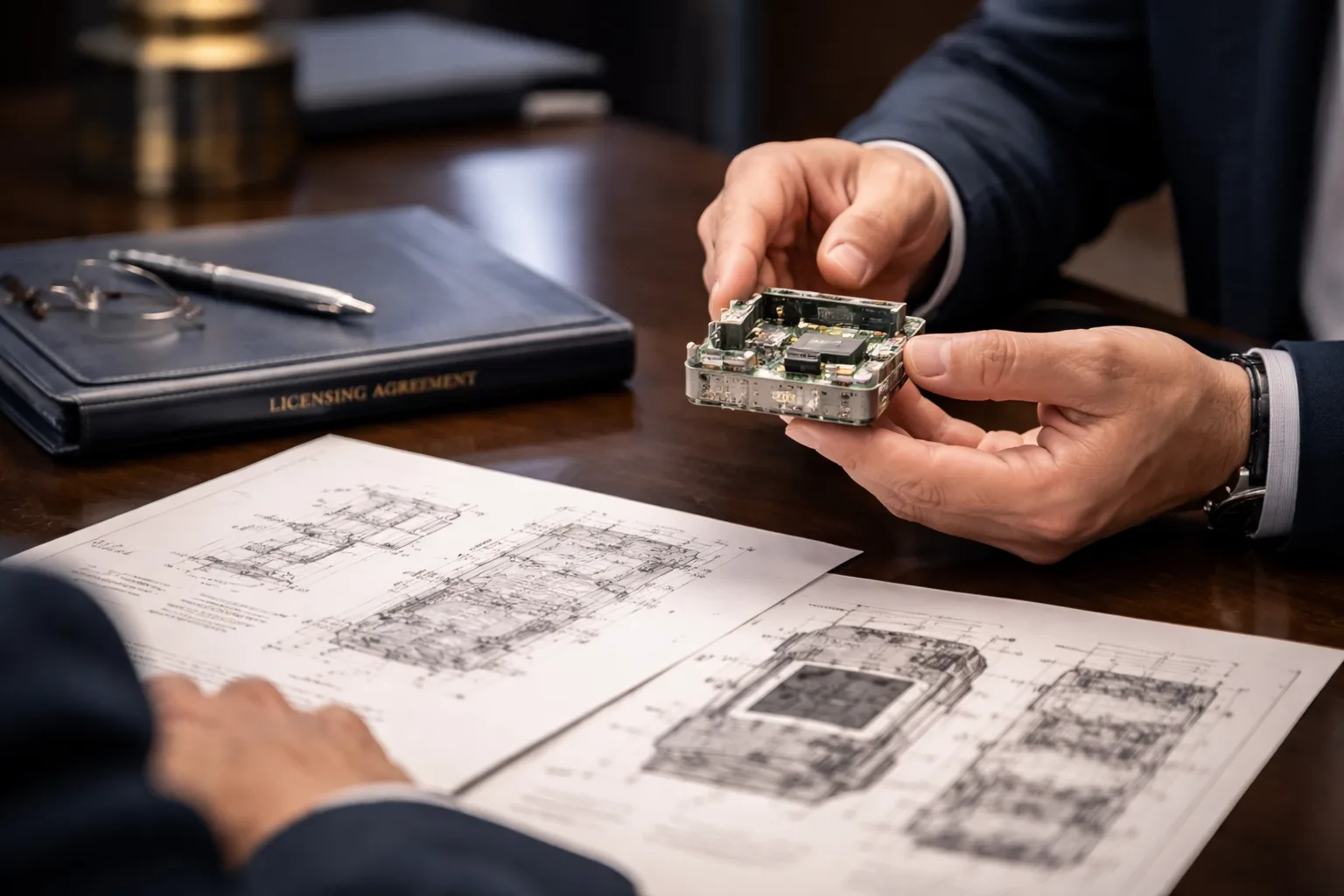
A materials scientist working on a corrosion-resistant coating for industrial pipelines holds a single issued patent, which on paper looks like a thinner portfolio than the biomedical engineer's two patents. But this patent has been licensed by a manufacturer with an established market position, and the license agreement includes minimum royalty terms tied to production volume. That commercial detail changes the evidentiary picture substantially. A licensing agreement is independent, third-party evidence that people outside the inventor's own circle have judged the invention worth paying for and building around. One licensed patent, documented properly, often does more evidentiary work than two unlicensed ones.
Scenario Three: The Software Engineer With a Pending Application Only
A software engineer working on a machine learning inference optimization method has filed a non-provisional patent application that has been published but not yet granted. Standing alone, this is a weak filing status for NIW purposes. But the underlying method has also been described in a peer-reviewed conference paper, and the associated open-source implementation has been adopted by several independent engineering teams, evidenced by public commit histories and citations in other technical papers. In this case, the pending patent application is one data point inside a broader record of technical adoption. It supports the narrative without needing to carry it.
A pending application should never be described in a petition using language that implies it has been granted. Adjudicators and USCIS's own systems can and do check USPTO's Patent Public Search database. A mismatch between the described status and the actual record undermines credibility on every other claim in the petition, not just the patent claim.
Comparing Patent Evidence Strength
| Filing Status | What It Demonstrates | What It Does Not Demonstrate | Typical Supporting Evidence Needed |
|---|---|---|---|
| Issued (granted) patent | Novelty and non-obviousness confirmed by examination | Commercial adoption, industry impact, national importance | Citations, licensing, product implementation, industry commentary |
| Published non-provisional application (pending) | An active, examined-in-process filing exists | That the claims will ultimately survive examination | Independent technical validation (publications, peer review, adoption) |
| Provisional application | A filing date has been secured | Novelty, non-obviousness, or that a full application will follow | Substantial independent evidence; should rarely be a centerpiece |
| Licensed patent (any status above) | A third party has assigned commercial value to the invention | The scale of that value without financial detail | License terms, royalty structure, licensee's market position |
How Patent Evidence Interacts With the Three NIW Prongs
Under the framework USCIS applies to National Interest Waiver petitions, a petitioner must show that the proposed endeavor has substantial merit and national importance, that the petitioner is well positioned to advance it, and that on balance it would benefit the United States to waive the job offer and labor certification requirements. Patent evidence tends to be misapplied when it is used to argue all three prongs at once, when in reality it speaks most directly to only one or two.
A patent primarily supports the second prong: it is direct evidence of the petitioner's own track record of innovation, which is one of the factors USCIS considers when assessing whether someone is well positioned to advance their proposed endeavor. It can indirectly support the first prong (national importance) when paired with evidence that the technology addresses a significant problem, but the patent document itself does not make that case. This distinction matters when drafting the petition letter: the patent should be introduced in the section discussing the petitioner's qualifications and track record, with a separate, independently evidenced discussion of why the underlying problem matters at a national scale.
A useful drafting discipline is to ask, for every mention of the patent in the petition letter, which of the three prongs that specific sentence is trying to support. If the answer is unclear, the sentence is probably doing less work than it appears to.
Documentation Checklist: Turning a Patent Into NIW-Ready Evidence
- Obtain a certified or official copy of the issued patent, or the published application, directly from USPTO's Patent Public Search or Patent Center.
- Prepare a plain-language summary of the invention and the problem it solves, written for a non-technical reader, separate from the formal patent abstract.
- Gather forward-citation data showing whether later patents or publications reference the invention, which can be pulled from USPTO or other patent search tools.
- Document any licensing, manufacturing, or commercialization activity, including redacted license terms if confidentiality is a concern.
- Collect at least one independent expert letter that addresses the invention's significance from someone outside the petitioner's immediate employer or research group.
- If multiple inventors are listed, clarify the petitioner's specific contribution and role in the invention.
- Cross-check every claim about filing status against the actual USPTO record before submission.
Patents Compared to Other Categories of NIW Evidence
Patents are one of several evidence categories that can support an NIW endeavor, and it helps to see how they compare to other common categories so a petitioner can judge where their own record is strong and where it needs reinforcement.
| Evidence Category | Best Demonstrates | Common Weakness |
|---|---|---|
| Issued patents | Technical novelty and inventive contribution | Impact and adoption, if unsupported by other evidence |
| Peer-reviewed publications | Field-level recognition of methods or findings | National importance, if the topic is narrow or purely theoretical |
| Industry adoption or licensing | Real-world value assigned by independent third parties | Documentation gaps if agreements are informal or undocumented |
| Expert letters | Contextual framing of significance from qualified peers | Credibility, if letters read as generic or unspecific |
The strongest NIW petitions rarely rely on one category alone. A patent paired with a licensing agreement and an expert letter addressing why the underlying problem matters at a national level tells a more complete story than any one of those documents could tell by itself. For a broader look at how to build that kind of layered record, see EB1 Mentor's guide on how original contributions are proven in an extraordinary ability petition, which addresses many of the same documentation principles even though it is written for the EB-1A category.
Common Mistakes to Avoid
Do not submit a patent certificate as a standalone exhibit with no accompanying explanation. Adjudicators reviewing dozens of petitions a week are not required to infer significance from a document alone; the petition letter needs to state, plainly, what the invention does and why it matters.
Beyond that core mistake, a few others show up repeatedly in self-prepared or under-prepared NIW filings involving patent evidence:
- Listing patents in a bullet-point exhibit index without integrating them into the petition letter's narrative.
- Failing to distinguish the petitioner's specific inventive contribution when a patent has multiple co-inventors.
- Treating patent count as a proxy for importance, when a single well-adopted patent often outweighs several unused ones.
- Omitting forward-citation or licensing evidence that would otherwise be straightforward to obtain.
- Confusing the national importance prong (which concerns the endeavor, not the petitioner) with the well-positioned prong (which concerns the petitioner's qualifications).
Petitioners weighing whether their own record leans more toward the well-positioned prong or the national importance prong may find it useful to review EB1 Mentor's discussion of the overlooked prongs in an EB-2 NIW petition, which looks specifically at how the second and third prongs are evaluated separately from the first.
When National Importance Still Needs to Be Built Separately
Even a well-documented, well-adopted patent does not automatically establish that the underlying endeavor has national importance in the sense USCIS requires. National importance is evaluated based on the endeavor's potential impact, not the elegance of the underlying invention. A patented improvement to a niche industrial process might be technically impressive and still fall short of national importance if its actual application is narrow and localized. Conversely, an invention with a more modest patent portfolio can meet the national importance standard if it addresses a widely recognized problem, such as a supply chain vulnerability, a public health gap, or an area with documented national policy interest.
Because this distinction is easy to get wrong, petitioners building an endeavor statement around patented technology often benefit from reviewing how that statement should be framed independently of the patent evidence itself. EB1 Mentor's guide on framing a national importance endeavor for EB-2 NIW walks through that process in more detail.
Working With Co-Inventors and Employer-Assigned Patents
Many patents relevant to an NIW petition were developed inside an employer's research program, with rights assigned to the employer under a standard invention assignment agreement. This is normal and does not, by itself, weaken the petition. What matters is documenting the petitioner's specific role in the inventive process, separate from any co-inventors or the assignee company. A short inventor declaration describing which claims originated from the petitioner's own conceptual work, corroborated where possible by lab notebooks, internal design records, or a supervisor's letter, helps establish that the patent reflects the petitioner's individual contribution rather than a team effort in which their specific role is unclear.
This becomes especially important when a patent has three, four, or more listed co-inventors. USCIS does not discount a patent automatically for having multiple inventors, but a petition that fails to clarify who did what leaves the adjudicator to guess, and guesses tend to run conservative.
Case Note: Distinguishing Contribution Among Co-Inventors
A robotics engineer named as one of four co-inventors on an issued patent for an autonomous navigation system initially submitted the patent with no further explanation of individual roles. On review, the petition letter was revised to include a short technical declaration, corroborated by an internal engineering memo, specifying that the petitioner had originated and reduced to practice the specific navigation algorithm claimed in the patent's independent claims, while the co-inventors had contributed to adjacent subsystems described in dependent claims. That level of specificity gave the adjudicator a concrete basis for crediting the petitioner's individual contribution rather than an ambiguous share of a group effort.

Forward Citations: The Evidence Petitioners Most Often Skip
Of all the supplementary evidence available to a patent holder, forward citations are among the most underused, largely because petitioners do not realize the data exists or how to retrieve it. A forward citation occurs when a later patent application, filed by an unrelated inventor or company, cites an earlier patent as prior art. This is meaningfully different from a self-citation or a citation within the same patent family, because it reflects that someone outside the petitioner's own circle, working independently, found the earlier invention relevant enough to reference in their own filing.
Forward citation data is publicly available through USPTO's Patent Public Search tool and through free third-party patent databases, and it can be compiled into a simple summary: how many later patents cite the invention, who filed them, and roughly how much time elapsed between the original grant and the citing filings. A pattern of citations from filings assigned to established companies, rather than only from filings connected to the same employer or research group, is a stronger signal than raw citation count alone. A single citation from an unrelated Fortune 500 filing can carry more weight than a dozen citations that all trace back to the same lab or company.
When compiling forward citation evidence, note whether citing patents come from the same industry or from an adjacent one. Citations from an unrelated industry can be a useful signal that the underlying innovation has broader application than the original filing suggested, which can support a national importance argument.
International Filings and PCT Applications
Petitioners who have pursued patent protection outside the United States, whether through direct foreign filings or through a Patent Cooperation Treaty (PCT) application, sometimes assume this evidence does not belong in a U.S. immigration petition. That assumption is usually wrong. International filing activity can support the national importance and well-positioned prongs in a different way than a U.S. patent alone: it demonstrates that the petitioner or their employer judged the invention valuable enough to pursue protection across multiple jurisdictions, which is itself a signal of perceived commercial or technical significance.
That said, international filings should be presented carefully. A PCT application is not itself a granted patent in any country; it is a mechanism for preserving the option to file in multiple national or regional patent offices within a set window. Describing a PCT filing as an issued patent, even unintentionally, is the same credibility risk discussed earlier with provisional applications. The petition should state plainly which jurisdictions, if any, have actually granted protection, and which remain pending, and should avoid implying a stronger status than the record supports. Where a foreign patent office has granted protection, a certified translation of the relevant claims and an explanation of that jurisdiction's examination standard can help an adjudicator unfamiliar with foreign patent systems understand what the grant actually represents.
Building the Narrative Around the Patent
The most effective use of patent evidence in an NIW petition treats the patent as a supporting exhibit inside a larger argument, not as the argument itself. That argument typically follows a sequence: describe the problem the endeavor addresses and why it matters nationally, describe the petitioner's specific technical contribution (with the patent as one form of evidence for that contribution), and describe why the petitioner, given their track record, is positioned to keep advancing the work. Patents fit naturally into the second step and can reinforce the third, but rarely carry the first on their own.
This is also where independent expert letters do work a patent cannot do by itself. A patent examiner's approval speaks to novelty; an expert letter from someone in the field, describing why the invention matters and how it compares to the state of the art, speaks to significance in language an adjudicator can act on. For guidance on building that kind of letter so it reads as substantive rather than generic, see EB1 Mentor's discussion of how expert letters strengthen an immigration portfolio without becoming generic recommendation letters.
Frequently Asked Questions
Does having a granted U.S. patent guarantee approval of an EB-2 NIW petition?
No single piece of evidence guarantees approval. A granted patent is strong evidence of novelty and technical contribution, but the petition still needs to independently establish national importance, the petitioner's positioning, and the balancing factors USCIS considers under its National Interest Waiver framework.
Can a pending, unexamined patent application still help an NIW case?
Yes, as supporting evidence of active innovation, particularly when paired with other documentation such as publications or independent technical adoption. It should not be presented as though it carries the same weight as an issued patent.
Is a provisional patent application worth including at all?
It can be included as part of a timeline showing ongoing work, but it should not be relied on as significant standalone evidence, since it is never examined and expires after twelve months unless converted to a non-provisional filing.
How many patents does an NIW petitioner typically need?
There is no fixed number. A single, well-documented, adopted patent can outweigh several unused ones. Quality of supporting evidence generally matters more than raw count.
Does an international (non-U.S.) patent count as evidence?
International patents and applications can be included and may support a narrative of global recognition, though U.S. patents are typically easier for USCIS to independently verify through USPTO systems.
What if the patent has already been licensed but the terms are confidential?
A redacted license agreement, or a letter from counsel or the licensee confirming that a licensing relationship exists, can often document the commercial relationship without disclosing confidential financial terms.
Should the petition explain patent claims in technical detail?
A brief, accurate technical description is useful, but the petition letter should prioritize a plain-language explanation of what the invention does and why it matters over a detailed walkthrough of individual patent claims.
Can a patent alone establish that the petitioner is well positioned to advance the endeavor?
A patent supports that showing but rarely establishes it alone. USCIS also considers factors such as education, skills, a credible plan, progress already made, and support from those in the field.
A Note on Accuracy
USCIS policy guidance, adjudication trends, and USPTO procedures can change. Nothing in this article should be read as a guarantee of any particular outcome, and readers should check current USCIS guidance or consult qualified legal counsel before relying on any specific procedural detail. EB1 Mentor is not a law firm and does not provide legal representation; the company helps clients strengthen the evidentiary record that supports an immigration case.
Building a Complete Record
A patent is a meaningful credential, and it belongs in an EB-2 NIW petition when the petitioner has one. But it functions best as one well-documented layer inside a case that also addresses national importance, individual positioning, and the balancing test directly, with independent evidence supporting each. Petitioners who are unsure whether their existing patent portfolio and surrounding documentation add up to a complete record may find it useful to have that record reviewed before filing, for example through EB1 Mentor's free portfolio evaluation. Every case is different, and professional guidance can help identify where the evidentiary gaps are before they become a problem in adjudication.
To discuss how your specific patents, publications, and professional record fit together as EB-2 NIW evidence, contact EB1 Mentor.
References and Further Reading
- USCIS Policy Manual
- USCIS: Employment-Based Immigration: Second Preference EB-2
- USPTO Patent Public Search
- USPTO: General Information Concerning Patents
- USPTO: Provisional Application for Patent
Every immigration case is unique, and patent portfolios in particular can be documented well or poorly depending on how they are framed. Professional guidance can help you identify where your evidentiary record is strong and where it needs reinforcement before you file. Contact EB1 Mentor to discuss your case.