

Most discussion of the O-1A focuses on scientists, engineers, founders, and executives. Yet athletics is one of the fields named directly in the classification: the O-1A covers individuals with extraordinary ability in the sciences, education, business, or athletics. Professional athletes and coaches do use it, and for the right person it can be an excellent fit. It is also one of the areas where applicants most often misjudge their evidence, partly because sport produces so many numbers, rankings, and results that seem self-explanatory to insiders and are anything but self-explanatory to an immigration officer.
This guide covers how athletes and coaches typically build an O-1A case, where the most common mistakes occur, and when the P-1A classification for internationally recognized athletes may be a better fit. It is educational material, not legal advice. EB1 Mentor is not a law firm, and athletes should confirm current USCIS requirements and consult qualified counsel, often in coordination with their league, team, or governing body.
Two Classifications, Two Different Questions
Athletes coming to the United States to compete or coach often have at least two nonimmigrant options worth comparing: the O-1A and the P-1A. They answer different questions.
- The O-1A asks whether the individual has extraordinary ability demonstrated by sustained national or international acclaim, placing them among the small percentage who have risen to the very top of the field.
- The P-1A is generally aimed at athletes who are internationally recognized and coming to perform in a specific athletic competition or for a team or league with a distinguished reputation. International recognition is a meaningful standard, but it is generally described as a high level of achievement rather than the very top of the field.
In practice, that means many professional athletes who would struggle to meet the O-1A standard can qualify for the P-1A, while some athletes who qualify for both choose between them based on flexibility, duration, and future plans.
| Factor | O-1A | P-1A |
|---|---|---|
| Core standard | Extraordinary ability, sustained national or international acclaim, top of the field | International recognition, generally a high level of achievement |
| Individual versus team | Individual classification | Available to individual athletes and to teams |
| Coaches | Possible when the coach's own record meets the standard | Generally tied to athletic performance; coaches and support personnel may fall under related categories depending on the facts |
| Duration | Tied to the event or activities, up to a regulatory maximum per petition, with extensions possible | For individual athletes, periods can be longer, with extensions subject to limits; confirm current rules |
| Relevance to a later green card | Evidentiary overlap with EB-1A is substantial | Less direct overlap with EB-1A standards |
Duration rules, extension limits, and support personnel categories are detailed and change over time, so confirm the current regulations and USCIS guidance before relying on any specific period.
Do not assume the O-1A is automatically the more prestigious or better option. For many professional athletes, the P-1A is the more natural and more readily approvable classification. Choosing the O-1A when the record does not clearly support it can create an unnecessary risk of denial and delay a season.
What O-1A Evidence Looks Like in Sport
The O-1A criteria were written to apply across very different fields, and athletes must map their achievements onto them carefully. Some criteria translate naturally; others need more work.
Awards and Titles
Major internationally recognized awards, such as an Olympic medal, can in some circumstances satisfy the standard on their own as a one-time achievement. More commonly, athletes rely on national or international titles, championships, and honors under the awards criterion. The key is documenting what the title represents: the level of competition, the field of entrants, how selection or qualification works, and the standing of the organizing body. A national championship in a sport with a deep competitive pool means something different from one in a sport with very few participants, and the petition should explain which is the case. Our article on what an award actually proves discusses how to frame awards so their significance is clear.
Rankings
Rankings are one of the most powerful forms of evidence in sport, and also one of the easiest to present poorly. A ranking needs context: who publishes it, how it is calculated, how many athletes are ranked, and what a given position means competitively. A sustained ranking over several seasons generally carries more weight than a single peak. Rankings do not map directly onto a single regulatory criterion, which is one reason athletes sometimes rely on the comparable evidence provision to present them. Our article on the O-1A comparable evidence provision explains how that works.
Published Material About the Athlete
Sports media coverage is often abundant, but not all of it counts equally. Coverage that is primarily about the athlete, in major media or significant sports publications, is stronger than match reports that mention the athlete in passing. The distinction between being mentioned and being covered, discussed in being quoted is not being covered, applies with particular force in sport, where results pages generate large volumes of passing mentions.
Critical Role for Distinguished Organizations
An athlete who played a critical role for a team with a distinguished reputation, such as a starting role on a club competing at the top level of its league or a leading role on a national team, may be able to use the critical role criterion. Evidence typically includes team records, statistics showing the athlete's contribution, and letters from coaches or officials explaining the athlete's role.
High Remuneration
Professional contracts can support the high remuneration criterion when compensation is high relative to others in the same sport and level. Comparative data is essential and can be difficult to obtain in sports where salaries are not public. Our article on high remuneration evidence in an O-1A petition explains how to build that comparison.
For athletes, the most persuasive petitions translate sport-specific achievements into language an officer outside the sport can understand. For every ranking, title, or statistic, add one sentence explaining what it means competitively and how many athletes could plausibly achieve it.

Individual Sports Versus Team Sports
The kind of sport shapes the evidence in predictable ways. In individual sports such as tennis, squash, golf, athletics, combat sports, or cycling, results and rankings attach directly to the athlete. A world ranking, a tournament title, or a personal best is the athlete's own. The challenge is usually context: explaining the depth of the competitive field and how the athlete's results compare over time.
In team sports, individual contribution is harder to isolate. A championship belongs to the team, and an officer may reasonably ask what the individual athlete had to do with it. Team-sport athletes typically need evidence that separates their performance from the team's: individual statistics with league-wide comparisons, selection to all-star or best-of-season teams, individual awards within the league, starting roles, captaincy, and statements from coaches explaining the athlete's specific contribution. Selection for a national team at major international competitions can also be significant, particularly when the selection process is competitive and documented.
The same distinction matters for the critical role criterion. In a team sport, showing that the athlete was essential to a distinguished team's success requires more than a roster listing. Minutes played, statistical impact, leadership roles, and explanations from people with direct knowledge all help make the case.
Athletes in Emerging and Niche Sports
Athletes in sports with smaller professional ecosystems face a particular challenge. Rankings may be less established, media coverage thinner, and compensation lower than in major sports, even at the very top. None of that makes the O-1A impossible, but it changes how the petition must be built.
In these cases, the petition often needs to explain the sport itself: its governing structure, the international competitions that matter most, how athletes qualify for them, and how many serious competitors exist worldwide. With that foundation, results that might otherwise look modest can be understood in context. A world championship podium in a sport with a small but highly competitive international field can represent a genuine top-of-the-field achievement. The comparable evidence provision may be especially relevant where standard criteria such as high remuneration do not reflect how excellence is rewarded in the sport. The key is honesty: explaining the sport's scale accurately rather than overstating it, and letting the athlete's position within it speak for itself.
The Special Questions Coaches Face
Coaches present a distinct set of issues. A coach can qualify for the O-1A on the strength of their coaching record: the achievements of athletes and teams they have coached, recognition as a coach, selection for national team or elite program roles, and influence on coaching methods. That record must itself demonstrate extraordinary ability at the very top of the coaching field.
A recurring question is whether a coach can rely on their own earlier achievements as an athlete. USCIS has addressed the relationship between competitive athletics and coaching in various decisions and guidance, and the answer is nuanced. Generally, the stronger the connection between the athletic achievements and the coaching role, such as coaching at a comparably elite level in the same sport, and the more recent the achievements, the more relevant they may be. Petitioners in this situation should not assume past athletic success will carry a coaching petition, and they should confirm current USCIS guidance with counsel. The safest petitions build the coaching record itself as the primary evidence.
Evidence That Tends to Carry Weight for Coaches
- Documented results of athletes and teams coached, with clear attribution of the coach's role.
- Coaching awards and honors from recognized bodies.
- Selection for national team, Olympic program, or top-level club coaching positions.
- Published coaching methods, certification curricula, or training programs adopted by others.
- Invitations to lead clinics or coach education programs at a high level.
- Letters from governing body officials, elite athletes, and other top coaches explaining the coach's influence.
Three Hypothetical Athletes and Coaches
These scenarios are illustrative and hypothetical. They are not client stories and do not describe actual EB1 Mentor clients.
Scenario One: The Squash Professional With a Strong Ranking
A professional squash player had been ranked within the top twenty in the world for four consecutive seasons, had won several international tour events, and had represented her country at major multi-sport games. She planned to relocate to the United States to train and compete while running a high-performance academy program.
Her record supported both classifications, and the choice turned on her plans. Because she intended to combine competition with high-level coaching and program leadership, and was considering a future immigrant petition, the O-1A's alignment with EB-1A standards made it attractive. The petition presented her ranking history with an explanation of how the world ranking is calculated and how many players compete on the professional tour, documented her tournament wins with event standing, and used coverage in major sports media focused specifically on her.
Scenario Two: The Rugby Player Who Fit the P-1A Better
A rugby player had played professionally in a strong domestic league abroad and had a few international caps. He had been signed by a U.S. professional club. His record was genuinely accomplished but did not clearly place him at the very top of his sport internationally.
For him, the P-1A was the more natural fit. His signing by a professional team and his international experience supported international recognition without requiring the higher O-1A showing. Pursuing an O-1A would have added risk without clear benefit, and the season timeline left little room for a request for evidence.
Scenario Three: The Swimming Coach Building on Coaching Results
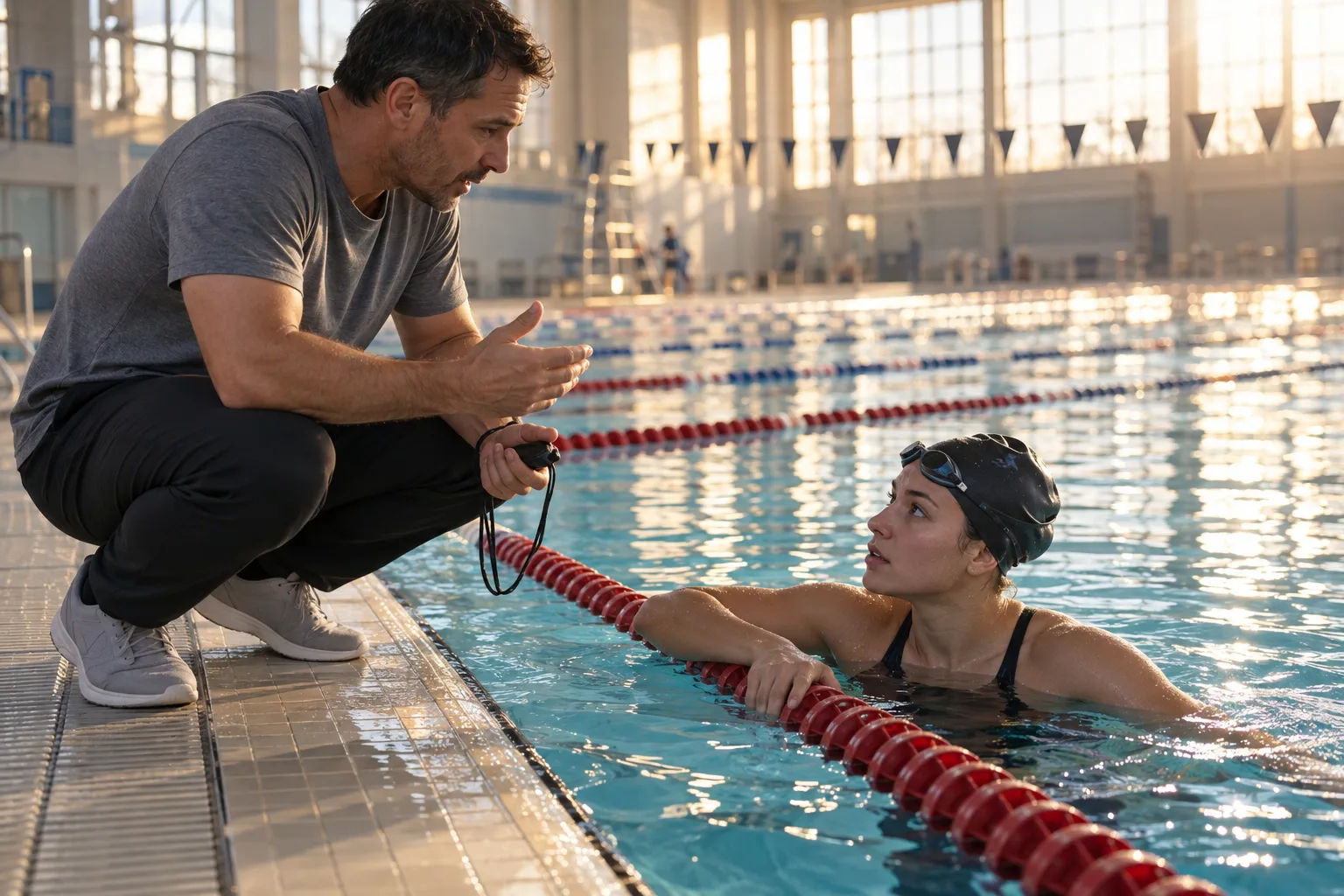
A swimming coach had competed at a national level years earlier, but her real distinction was as a coach: several of her athletes had reached international finals, she had served on national team coaching staff at major championships, and her training program had been adopted by other clubs in her country. A U.S. university program wanted to hire her.
Her O-1A petition relied on her coaching record, not her athletic career. It documented her athletes' results with evidence of her role in their development, her national team appointments, the adoption of her program, and letters from governing body officials and other elite coaches. Her earlier athletic achievements appeared only as background. The decision to lead with coaching evidence reflected both the strength of that record and the uncertainty around relying on older athletic results.
The Advisory Opinion in Athletics
O-1A petitions generally require a written advisory opinion from an appropriate peer group, labor organization, or management organization. In athletics, relevant organizations may include national governing bodies, player associations, or league organizations, depending on the sport and the nature of the work. Identifying the right organization early matters, particularly when a season start date sets the timeline. Our article on the O-1A advisory opinion explains the requirement and how it differs from support letters.
Timing Around a Season
Sport runs on calendars. Training camps, transfer windows, tournament entries, and season openers set hard deadlines. Immigration timelines do not bend around them. Athletes and teams should work backward from the date the athlete needs to be available, accounting for petition preparation, the advisory opinion, USCIS adjudication, any request for evidence, and, for athletes abroad, a consular appointment. Premium processing may shorten the USCIS decision period, but it does not shorten preparation or consular steps, as discussed in premium processing buys a deadline, not a decision.
Checklist: Preparing an Athletics O-1A
- Compare the O-1A and P-1A honestly against your record and plans before choosing.
- Gather ranking histories with explanations of methodology and depth of field.
- Document titles and awards with evidence of the level of competition and the organizing body's standing.
- Separate media coverage about you from passing mentions in results reporting.
- Obtain contracts and comparative compensation data where high remuneration is claimed.
- For coaches, document athletes' results and your specific role in their development.
- Identify the right organization for the advisory opinion early.
- Work backward from the date you need to be available, with a buffer for a request for evidence.
- Consider how the classification fits any longer-term immigration plans.
Common Mistakes Athletes Make
| Mistake | Better approach |
|---|---|
| Submitting results tables without explanation | Explain what each result means competitively and why it matters |
| Counting every mention in sports media as published material | Focus on coverage primarily about the athlete in significant outlets |
| Relying on a single peak ranking | Show sustained performance across seasons |
| Assuming past athletic success carries a coaching petition | Build the coaching record as the primary evidence |
| Choosing the O-1A by default | Compare with the P-1A based on the actual record and goals |
| Starting the process weeks before the season | Start months ahead, accounting for all steps |
Looking Further Ahead
For athletes and coaches who hope to remain in the United States long term, the O-1A offers a useful bridge because its evidentiary standard closely resembles the EB-1A. Time spent competing or coaching at the top level in the United States can add to the record for a later immigrant petition. Our article on using the years on an O-1A to build the EB-1A you file later covers that planning. Athletic careers can be short and unpredictable, so the timing of any immigrant petition deserves particular care, since the petition must reflect ability at the time of filing and an intent to continue working in the field.
Frequently Asked Questions
Can professional athletes qualify for the O-1A?
Yes. Athletics is one of the fields named in the O-1A classification. The athlete must demonstrate extraordinary ability through sustained national or international acclaim.
What is the difference between the O-1A and the P-1A for athletes?
The O-1A requires extraordinary ability at the very top of the field. The P-1A generally requires international recognition and is tied to competition or to a team or league of distinguished reputation. Many athletes qualify more readily for the P-1A.
Can an Olympic medal satisfy the O-1A on its own?
A major internationally recognized award can in some circumstances satisfy the standard as a one-time achievement. Whether a particular medal qualifies depends on the facts and should be confirmed with counsel.
Can a coach qualify for the O-1A?
Yes, when the coaching record itself demonstrates extraordinary ability at the top level of coaching. Reliance on earlier athletic achievements is a nuanced question.
Do world rankings count as evidence?
Rankings can be strong evidence when presented with context about methodology, depth of field, and sustained performance. They may be presented through the criteria or through comparable evidence.
Who provides the advisory opinion for an athlete?
Often a national governing body, a player association, or a league organization, depending on the sport and the nature of the work.
How far ahead of the season should an athlete start?
Typically several months, accounting for evidence gathering, the advisory opinion, USCIS processing, possible requests for evidence, and consular appointments.
Is the O-1A a path to a green card for athletes?
Not directly, but the evidentiary overlap with the EB-1A means time on an O-1A can help build a later immigrant petition.
References and Further Reading
- USCIS: O-1 Visa, Individuals with Extraordinary Ability or Achievement
- USCIS: P-1A Athlete
- 8 CFR 214.2 (O and P classifications at 214.2(o) and 214.2(p))
- USCIS Policy Manual, Volume 2, Part M: O Nonimmigrants
- U.S. Department of State: Temporary Worker Visas
Conclusion
Sport produces some of the clearest measures of excellence in any field: rankings, titles, results, selections. That clarity is an advantage, but only if the petition translates it into terms an officer can evaluate. Athletes and coaches who explain what their achievements mean, choose the classification that fits their record, and start early give themselves the best chance of being ready when the season begins.
Every athlete's situation is different, and the choice between the O-1A and the P-1A deserves a candid look at the record and long-term goals. If you are an athlete or coach considering the O-1A, EB1 Mentor can help you evaluate your evidence and plan how to present it. Review our O-1A portfolio services, request a profile evaluation, or contact EB1 Mentor to talk through your plans.
An athlete or coach weighing the O-1A? Contact EB1 Mentor to talk through your record and timeline, or start with a profile evaluation.