
On this page
- A sustained-acclaim record uses dated evidence to show that recognition and high-level standing persisted rather than appearing only at one moment. The relevant period depends on the career and field, so continuity should be demonstrated through specific achievements and current context, not a fixed formula
- Early recognition
- Development
- Career transition
- Current standing
- Distinguish a career trajectory from a collection of dates
- Construct an acclaim chronology with no hidden intervals
- Chronology patterns that weaken a sustained-acclaim claim
- Explain continuity without inventing a rigid time rule
- Explain continuity without inventing a rigid time rule: review layer 2
- Explain continuity without inventing a rigid time rule: review layer 3
- Evidence-quality notes specific to Showing Sustained Acclaim Across Time Rather Than a Single Moment
- Review early recognition from an independent reader's perspective
- Sustained-acclaim chronology checklist
- Questions to ask about peaks, gaps, and current recognition
Key takeaways
- There is no substitute for a dated evidence map.
- One major event may begin a chronology but does not explain later standing.
- Career changes and quieter periods require context rather than concealment.
- Current evidence should show continued relevance without rewriting earlier history.
A sustained-acclaim record uses dated evidence to show that recognition and high-level standing persisted rather than appearing only at one moment. The relevant period depends on the career and field, so continuity should be demonstrated through specific achievements and current context, not a fixed formula
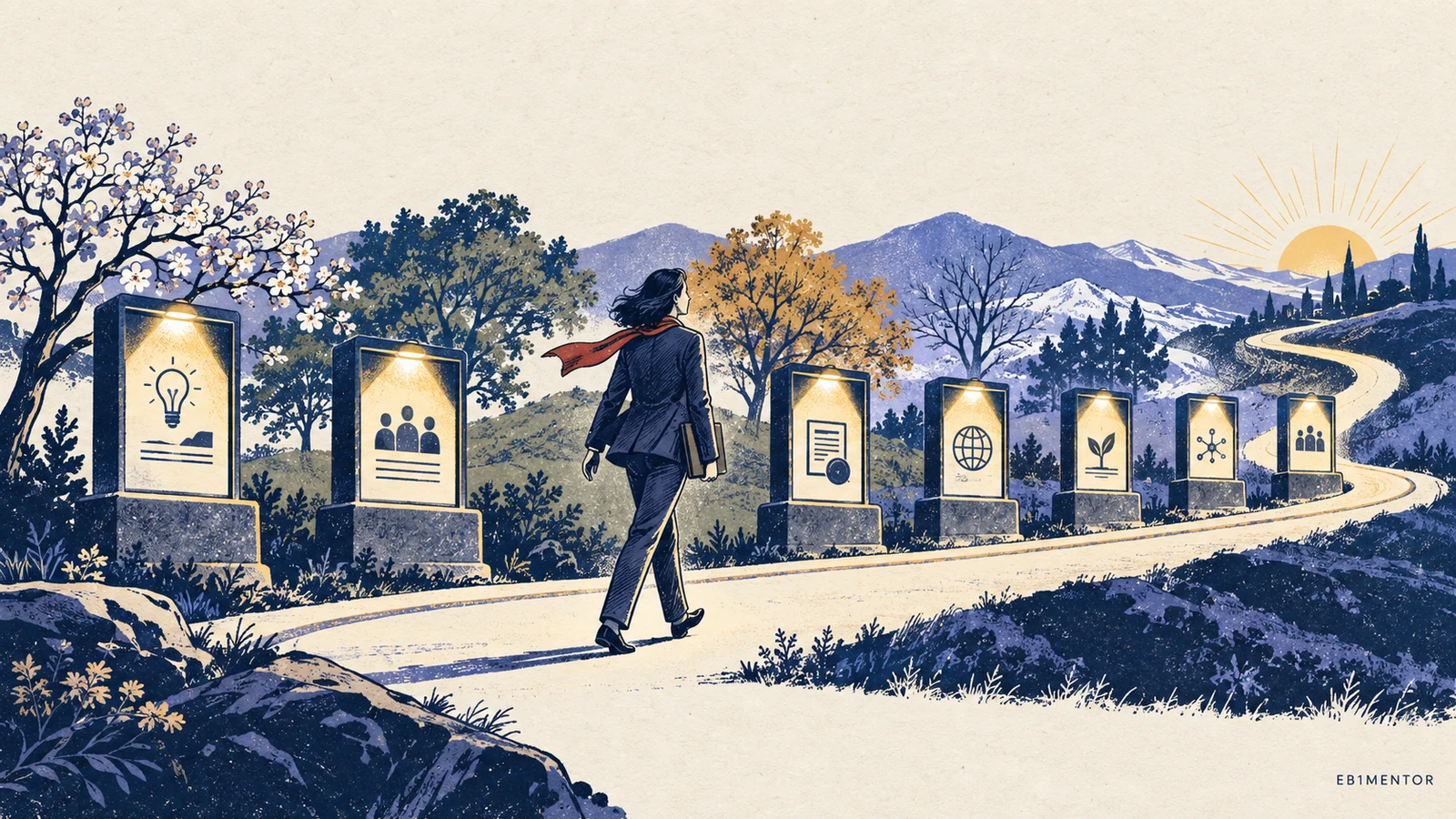
Sustained acclaim is demonstrated through chronology, repeated independent recognition, and continued field relevance. A single peak may be important, but the record should explain what came before and after it.
Before analyzing showing sustained acclaim across time rather than a single moment, start with the EB-1A final-merits overview for the governing two-step framework, then return to this guide for the narrower evidence-quality problem addressed here.
Early recognition
When did recognition beyond an immediate workplace begin? Begin with dated awards, publications, selective opportunities, or adoption. Record the source, operative date, beneficiary connection, field, and exact proposition before drawing a conclusion. Do not backdate acclaim using later retrospective praise alone. Test the claim against plausible alternative explanations and disclose any affiliation, methodology gap, missing denominator, or timing issue. The objective is a reproducible evidentiary finding, not a favorable label.
Development
Did the record deepen, broaden, or become more independent? Begin with repeated achievements and expanding professional reach. Record the source, operative date, beneficiary connection, field, and exact proposition before drawing a conclusion. Activity without outside recognition may not establish continuity. Test the claim against plausible alternative explanations and disclose any affiliation, methodology gap, missing denominator, or timing issue. The objective is a reproducible evidentiary finding, not a favorable label.
Career transition
Does the transition preserve the same core area of acclaim? Begin with records connecting fields, roles, geographies, or periods. Record the source, operative date, beneficiary connection, field, and exact proposition before drawing a conclusion. Explain pauses and changes rather than forcing unrelated work into one narrative. Test the claim against plausible alternative explanations and disclose any affiliation, methodology gap, missing denominator, or timing issue. The objective is a reproducible evidentiary finding, not a favorable label.
Current standing
What demonstrates that recognition remains meaningful now? Begin with recent judging, adoption, leadership, coverage, or high-level work. Record the source, operative date, beneficiary connection, field, and exact proposition before drawing a conclusion. A current job title alone does not establish sustained acclaim. Test the claim against plausible alternative explanations and disclose any affiliation, methodology gap, missing denominator, or timing issue. The objective is a reproducible evidentiary finding, not a favorable label.
Distinguish a career trajectory from a collection of dates
The following matrix keeps the central questions in showing sustained acclaim across time rather than a single moment separate. Each row has a different source function and limitation. Treating them as interchangeable can make an authentic record appear stronger than it is or cause relevant evidence to be overlooked.
| Question | Preferred evidence | Analytical test | Limit to control |
|---|---|---|---|
| Early recognition | Dated awards, publications, selective opportunities, or adoption | When did recognition beyond an immediate workplace begin? | Do not backdate acclaim using later retrospective praise alone. |
| Development | Repeated achievements and expanding professional reach | Did the record deepen, broaden, or become more independent? | Activity without outside recognition may not establish continuity. |
| Career transition | Records connecting fields, roles, geographies, or periods | Does the transition preserve the same core area of acclaim? | Explain pauses and changes rather than forcing unrelated work into one narrative. |
| Current standing | Recent judging, adoption, leadership, coverage, or high-level work | What demonstrates that recognition remains meaningful now? | A current job title alone does not establish sustained acclaim. |
Construct an acclaim chronology with no hidden intervals
Complete this showing sustained acclaim across time rather than a single moment sequence before writing the final conclusion. Each stage should produce a dated workpaper and an identified reviewer decision. If a stage exposes an unsupported proposition, return to the source map or narrow the claim rather than allowing drafting language to hide the gap.
Collect dates from primary records
Stage 1: apply this step to the evidence supporting early recognition. Record what was verified, what remains uncertain, and how the result changes the final-merits narrative.
Plot recognition separately from activity
Stage 2: apply this step to the evidence supporting development. Record what was verified, what remains uncertain, and how the result changes the final-merits narrative.
Mark gaps and career transitions
Stage 3: apply this step to the evidence supporting career transition. Record what was verified, what remains uncertain, and how the result changes the final-merits narrative.
Add recent independent evidence
Stage 4: apply this step to the evidence supporting current standing. Record what was verified, what remains uncertain, and how the result changes the final-merits narrative.
Test the chronology against the claimed field
Stage 5: apply this step to the evidence supporting early recognition. Record what was verified, what remains uncertain, and how the result changes the final-merits narrative.
Chronology patterns that weaken a sustained-acclaim claim
| Risk pattern | Why it matters | Corrective control |
|---|---|---|
| All major evidence comes from one year | The record may show a peak rather than continuity. | Add earlier and later recognition or narrow the temporal claim. |
| Retrospective letters supply the entire timeline | Later opinions replace contemporaneous records. | Use letters to explain, not manufacture, dated events. |
| Ordinary employment fills an evidence gap | Continued work is mistaken for continued acclaim. | Identify recognition, impact, or selective responsibility during the interval. |
| Unexplained change of field | Achievements no longer share a coherent professional context. | Explain the relationship between the former and current areas of work. |
Explain continuity without inventing a rigid time rule
Build two parallel timelines: one for activity and one for recognition. Activity includes jobs, projects, publications, exhibitions, products, or performances. Recognition includes selective awards, independent coverage, judging invitations, adoption, citations, high-level roles, or comparable field responses. The space between the two lines is analytically important because being active is not automatically the same as being acclaimed.
Explain continuity without inventing a rigid time rule: review layer 2
A gap is not automatically fatal, and no fixed number of months or years should be invented. The record should explain whether the field has long development cycles, whether confidential work delayed public recognition, whether family or market circumstances affected output, or whether a transition led to a new form of impact. Explanations should be supported and should not turn absence into an achievement.
Explain continuity without inventing a rigid time rule: review layer 3
Current evidence should close the chronology. Show what the beneficiary is doing now, how that work relates to the field in which acclaim was earned, and what recent independent or objective evidence demonstrates continuing standing. Avoid relying only on a biography that repeats older accomplishments in present tense.
Evidence-quality notes specific to Showing Sustained Acclaim Across Time Rather Than a Single Moment
Early recognition should be tested with dated awards, publications, selective opportunities, or adoption. The reviewer should be able to answer: When did recognition beyond an immediate workplace begin? The working note must also state this boundary: Do not backdate acclaim using later retrospective praise alone. Preserve the complete underlying record and cite the page, section, dataset version, or dated event that supports the conclusion.
Development should be tested with repeated achievements and expanding professional reach. The reviewer should be able to answer: Did the record deepen, broaden, or become more independent? The working note must also state this boundary: Activity without outside recognition may not establish continuity. Preserve the complete underlying record and cite the page, section, dataset version, or dated event that supports the conclusion.
Career transition should be tested with records connecting fields, roles, geographies, or periods. The reviewer should be able to answer: Does the transition preserve the same core area of acclaim? The working note must also state this boundary: Explain pauses and changes rather than forcing unrelated work into one narrative. Preserve the complete underlying record and cite the page, section, dataset version, or dated event that supports the conclusion.
Current standing should be tested with recent judging, adoption, leadership, coverage, or high-level work. The reviewer should be able to answer: What demonstrates that recognition remains meaningful now? The working note must also state this boundary: A current job title alone does not establish sustained acclaim. Preserve the complete underlying record and cite the page, section, dataset version, or dated event that supports the conclusion.
Review early recognition from an independent reader's perspective
An independent reader should not need to infer the source, relationship, date, or comparison behind a material assertion in showing sustained acclaim across time rather than a single moment. Read the section without relying on the petition's conclusion and identify what fact each exhibit establishes on its own. Then identify which propositions depend on interpretation, specialized knowledge, or a comparison. If the chain breaks, add the missing record or narrow the statement. This exercise also reveals when an exhibit is cited repeatedly without adding a new fact.
Perform a contradiction review across the forms, support letter, expert letters, biography, exhibit labels, translations, and source records. Compare names, roles, dates, counts, geographic descriptions, field terminology, and the scope of claimed impact. Resolve a difference through the best primary source and explain material discrepancies. Do not silently select the most favorable version. For this topic, pay particular attention to the risk that all major evidence comes from one year; the corrective record should be visible where the claim first appears.
Finally, test proportionality. The amount of narrative devoted to a fact should reflect its probative value, not merely how easy the document was to obtain. Give primary and independently corroborated evidence enough context to be understood, consolidate repetitive material, and state why a limitation matters. In showing sustained acclaim across time rather than a single moment, the strongest conclusion should be supported by several complementary source functions rather than several copies of one source. Record the editorial decision so later revisions do not restore a claim that was intentionally narrowed or removed. A second reviewer should be able to reproduce that decision from the retained source map without relying on undocumented drafting assumptions.
Sustained-acclaim chronology checklist
- Early recognition is supported by dated awards, publications, selective opportunities, or adoption and tied to a precise exhibit location.
- Development is supported by repeated achievements and expanding professional reach and tied to a precise exhibit location.
- Career transition is supported by records connecting fields, roles, geographies, or periods and tied to a precise exhibit location.
- Current standing is supported by recent judging, adoption, leadership, coverage, or high-level work and tied to a precise exhibit location.
- The filing directly controls this risk: all major evidence comes from one year.
- The filing directly controls this risk: retrospective letters supply the entire timeline.
- The filing directly controls this risk: ordinary employment fills an evidence gap.
- The filing directly controls this risk: unexplained change of field.
- Affiliations, methodologies, dates, comparison populations, and material limitations are disclosed.
- The analysis distinguishes verified facts, expert interpretation, advocacy, and unresolved assumptions.
- The final-merits conclusion evaluates the complete record without mechanical counting or duplicated significance.
For source-level controls supporting showing sustained acclaim across time rather than a single moment, use the extraordinary-ability primary-sources guide to verify authority, versions, dates, and citation functions.
For exhibit planning specific to early recognition, use the EB-1A evidence-planning guide to map each proposition to its primary record, independent context, and limitation.
Compare this analysis with Sustained National or International Acclaim: Meaning and Evidence so the adjacent issue is addressed without copying or conflating its reasoning.
Questions to ask about peaks, gaps, and current recognition
A final reviewer should be able to answer these practical questions from the cited record: Is there a fixed minimum period for sustained acclaim? Can one major award establish sustained acclaim? Does a gap in public recognition automatically defeat the case? What types of recent evidence can help show continuing acclaim? If an answer depends on an undefined label, unsupported adjective, hidden relationship, inconsistent date, or unexplained number, the evidence map is not complete.
Sources and further reading
- USCIS Policy Manual, Volume 6, Part F, Chapter 2USCIS
USCIS guidance on EB-1 extraordinary ability evidence and final merits.
- 8 CFR 204.5(h), Aliens with Extraordinary AbilityElectronic Code of Federal Regulations
Current regulatory text for EB-1 extraordinary ability.
- Instructions for Form I-140, Immigrant Petition for Alien WorkersUSCIS
Official filing and initial-evidence instructions.
- AAO DecisionsUSCIS Administrative Appeals Office
Official decision library; individual decisions must be evaluated for authority and factual context.
- Matter of Chawathe, 25 I&N Dec. 369 (AAO 2010)USCIS Administrative Appeals Office
Precedent discussion of the preponderance standard and evidence quality.
Frequently asked questions
Is there a fixed minimum period for sustained acclaim?
No universal period should be assumed. The analysis is record-specific and should consider the field, career chronology, repeated recognition, and current standing.
Can one major award establish sustained acclaim?
A major achievement can be highly important, but the record should still address the applicable route and what the broader chronology demonstrates about continuing recognition.
Does a gap in public recognition automatically defeat the case?
Not automatically. The gap should be identified and explained with reliable context, while the complete chronology is evaluated honestly.
What types of recent evidence can help show continuing acclaim?
Recent independent recognition, judging, adoption, leadership, field impact, selective invitations, or comparable high-level work may be relevant when properly documented.
Public update history
Initial publication of Showing Sustained Acclaim Across Time Rather Than a Single Moment.
Contributors and review roles
Author
EB1 Mentor Editorial Team
Immigration evidence education team · EB1 Mentor
Prepares source-aware educational guides about extraordinary-ability immigration categories and evidence organization. The material is general information, not legal advice.